

It is striking how history intertwines and anecdotes enrich our knowledge. A few days ago commented in this blog how I had the opportunity to meet, dine and enjoy a long get-together with my nephew Borja Casans, Count of Ampudia and his friends Joaquín Rebuelta Melgarejo and Alfonso Martos, current Marquis of Santiago de Oropesa.
I kept thinking about the title of Marquis of Santiago de Oropesa after writing the blog. His is a title that connects directly with the blood of the Inca monarchs, one of the most interesting and unknown empires outside America and one of the most unknown dynasties, but not for that reason less important. This historical curiosity made me want to delve a little deeper into the relationship between the Incas and the Spanish.
The title of Marquis of Santiago de Oropesa was awarded by Philip III to the granddaughter of Manco Incaone of the more than 500 children of Huayna Capacwho was recognized as Emperor Inca by Francisco Pizarro on November 15, 1533, after the death by the Spaniards of Atahualpason of Huayna Capac.
Ana María Lorenza Coya de Loyola was recognized by Philip III as ".heir of the Inca Empire, the legitimate heiress of the Inca Empire", in the concession of the title that the King of Spain granted him.
But... where did Ana María come from, who was Ana María?
His great-grandfather, Manco Inca, was one of the 500 sons of Huayna Capac.
Huayna Capac was the son of Sapa Inca Tupac Yupanqui and the Coya Mama Ocllo. Huayna Capac had been the first, in the history of the Inca Empire, to assume total control in both the political and religious spheres and therefore had been the first case in the history of the Inca Empire in which, in the same person, all powers were concentrated. It was he, as supreme chief, who in 1527 was given notice of the arrival of strange individuals with beards in "wooden houses" that floated.
The children of Huayna Capac were many. He had had them with all the princesses and queens of the different conquered territories or with those that belonged to territories that owed vassalage to the Incas since the times of his father or grandfather. In fact, it was an honor to present the Inca with a princess or even in some cases even a queen and for him to take her as his wife. She would become one of his many wives. The children of these unions were "Inca privilege"but not "Incas of blood". The only children with inheritance rights were the children of the main line. Those who were born of male Incas who in turn had married their Inca sisters, brothers of father and mother. These we will call "brothers, just like that. To the "half bloodas we do today, we will call them "...".half siblings".
The children of the Inca with the Coya -that was the name given to the sister who had married the Inca- formed the "...".panaca"or main family group. The "panaca"real. The rest of the Inca's marriages, or rather, the rest of the Inca's children, depending on who the mother was, were more or less close to achieving, in case the line of succession failed, to assume the position of the new axis of the "royal".panaca"royal. Something very similar to what happens with the dynastic problems in the European royal houses.
The sons of Huanya Capac with the Coya -queen and sister- Rahua Ocllo were:
– Ninan Cuyuchiwho died of smallpox before Pizarro arrived in Peru.
– Huascar Incawho was assassinated by Atahualpa, his half-brother, in the struggle for the Inca throne.
Huayna Capac also had children with "Mama". Runtu Amaru Inca -being "mom" equivalent to "palla www. palla"or important woman. Amaru was the Quechua name for snake - the snake was part of the coat of arms of the Incas. It was called "Incato emphasize that he was of pure blood and not "purebred".inca of privilege" or honor. The son of both was:
Huayna Capac with the "palla www. palla" -important woman- Tocto Cocawho was not an "Inca" but a princess much loved by Huayna Capac and who came from a conquered kingdom in northern Peru, had a:
- Ata-hualpa. Captured by Pizarro, he was executed by Pizarro. Atahualpa had previously ordered to kill Huáscar with the purpose of inheriting his condition of Inca. When Atahualpa died, the empire was left without an Inca.
– Tupac-hualpa Inca. He was named Inca by Pizarro to fill the vacuum left by the death of his brother. He died when they were making the trip from Cajamarca to Cuzco.
Huayna Capac with the Cuntur Cacica Huacho. Huacho is the zone of the coast-north of Peru. With her he had:
- La Ñusta -princess- Inés Huaylas Yupanqui. Huaylas is the northern highlands of Peru. She was the first wife of Pizarro.
Huayna Capac with the Cacica".Juana"Colque, daughter of an "Apu" or main indigenous person of an area, had a:
- The Ñusta -princess- Beatriz Huaylas. The denomination of "Huaylas"confirms that this branch was also from the northern highlands of Peru. This princess would be the one that in some writings they unduly confuse with Beatriz Coya. She was married first with a man of confidence of the Pizarro family, Pedro Bustinza. Captain Bustinza distinguished himself in the siege of Cuzco, but was executed years later by Governor La Gasca for his loyalty to Gonzalo Pizarro. When the Ñusta was widowed, she later married the tailor Diego Hernandez.
- Paulu Inca. He was named Inca by Almagro and was later recognized as Inca by the Pizarro family when he was put in charge of Cuzco.
The daughter of Yamque Yupanqui - Huayna Capac's brother - with Tocto Ocllo - sister of Atahualpa's mother, Tocto Coca - was:
- Angelina Yupanqui, original name "Cuxirimay Ocllo". One of the most striking characters in this whole period of history we are now talking about. Because of her ancestry she was reserved to be Atahualpa's wife. She married Atahualpa at the end of 1,531, once named Atahualpa Inca and he was about thirty years old and she was between eleven and twelve years old. At that age she became the most important woman in the Empire. Shortly after her marriage, her double cousin and husband Atahualpa, was taken prisoner by the Spaniards and she accompanied him in his captivity, until July 26, 1533, when Pizarro ordered his execution. Their marriage lasted only a few months. Angelina, very much in love with her husband, tried to commit suicide to accompany her husband, but she did not achieve her goal. Pizarro was very much in love with her and it is said that she was very beautiful. The Marquis had recently separated from his first wife, with whom he had had two children. A few years after Atahualpa's death, after she had converted to Christianity and changed her name to Angelina, Pizarro married her. It must have been around 1538. Pizarro was about sixty years old and Angelina about sixteen. Angelina bore Pizarro two children, but Pizarro either never acknowledged them or did not have time to do so before he died. The marriage lasted only three years. Once Pizarro died, Angelina married Juan de Betanzos, conquistador and important chronicler of the time. Betanzos tells in his account how the Marquis wanted "take it for him". No one better than the third husband to talk about Angelina. Betanzos was fluent in Quechua, the language spoken in the Inca Empire.
The reason why Manco Inca came to be recognized by the Blood IncasThe only ones entitled to call themselves Incas in their official denomination, was because practically the entire imperial family - the family of Huascar, the heir to the throne - had been assassinated by Quisquis.
Quisquis was the general who was sent by Atahualpa to Cuzco in order to eliminate the entire main branch of the family. Atahualpa had a certain blood right to the throne. By ordering the killing of all those who improved his right, he freed the way for a "blood right" to the throne.half-brother"He was, could assume office as a legitimate Inca.
He had ordered to kill all the members of the main branch, that of Huáscar. Atahualpa had died, a short time later, by order of Pizarro and Tupachualpa, Atahualpa's brother, had died of illness or poisoned by the "huascaristas". In this way, the Manco Inca - who was not Huascar's direct family, but who was still in line of succession because he was the son of Huayna Capac with a princess of Inca blood - went out to meet Pizarro.
From this agnatic line of the Manco Inca comes Sayri Tupac, the father of Beatriz Coya, grandfather of Ana María Lorenza Coya de Loyola, first Marquesa de Santiago de Oropesa and recognized by Felipe III as "...".heir of the Inca Empire, the legitimate heiress of the Inca Empire".
When Manco Inca rebelled, the Spaniards established in Cuzco raised to the Inca throne a half-brother of lesser rank, Paulo Inca, and recognized him as such.
Paulo Inca was a collaborator of Almagro's company, but later he also earned a recognized place with the Pizarros. In the eyes of the main house, that of the Vilcabamba Incas - the legitimate descendants and heirs of the Inca crown - this Paulo Inca was nothing more than a puppet put in place by the Spaniards.
But it is also important to clarify that the relationships between the ".legitimate"of Vilcabamba and the "collaboratorsThe "Inca house" of Cuzco was never broken. In fact, it has recently been documented that when the Incas of Vilcabamba, hiding from the Spaniards of Cuzco, went down to Cuzco, they stayed in the house of Paulo Inca. Paulo Inca before "their blood Inca lords"did not appear as a "great lord"although he did do so before the Spaniards. Evidence of this has been found some 20 years ago, when documents and letters were found in which these passages and the coordination that existed between the "between legitimate rebels and collaborationists.". Undoubtedly, history proves to be always richer in contrasts than many novels.
But let's return to the story of what happened as time went on.
According to Inca Garcilaso, Atahualpa despised Francisco Pizarro once he discovered that he could not read. The Incas considered that superiors had to be ahead of inferiors in both war and peace.
Atahualpa, who had been captured by Pizarro, became a close friend of Hernando Pizarro during his captivity. Hernando taught him to play chess and shared many hours with him in this activity. Francisco Pizarro sent Hernando out of Cajamarca when he finally decided to kill Atahualpa. According to his way of seeing life and war, he had no other choice. It was announced to him that there were about 50,000 men approaching Cajamarca in order to free the Inca and he made the decision to execute him. It was necessary to act fast. "The dog is dead and the rabies is over!"Pizarro must have thought.
Pizarro arrived in America as a young boy, had spent 15 years in Central America, had first-hand knowledge of the adventures and misadventures of Cortés in Mexico - his brother on his father's side, Hernando, was second cousin to Hernán Cortés - and had therefore arrived in Peru, with a lot of experience of how to work to win a war like this, before he had even fought it. He had significant military experience in taking new lands and was putting into practice what he already knew and had seen that had worked in other territories.
An Inca knew how to live and how to die. So said Atahualpa when he saw that they were going to kill him in spite of having paid for his freedom. In fact, he more than paid the promised treasure. He delivered in Cajamarca 84 tons of gold and 164 tons of silver, which made Pizarro enormously rich. "Uses of war are to win or be won.".
On July 26, 1533, Atahualpa died, executed by the Spaniards. He was offered to be burned alive or convert to Christianity and be strangled. He chose strangulation. He was strangled on the post, after the priest baptized him giving him the Christian name of Francisco. That night thousands of Atahualpa's subjects committed suicide to follow their lord to the other world.
Atahualpa, being from "half blood"He had been formed entirely by his father, the Inca Huayna Capac, since his heirs were very young and it was Atahualpa, a young man already ready for war, who accompanied him in many conquests. Especially in the one of the Chachapoyas, that so much importance will have later in the evolution of the history.
Nine years had passed since 1524, when Francisco Pizarro teamed up with Diego de Almagro and Hernando de Luque - an influential priest of the time in Panama, where they were all based - to set out from Panama, where Pizarro was encomendero and mayor, to conquer "...".El Birú"The Inca Empire of Peru, of which there was vague news and in which others had failed miserably, as for example Pascual de Andagoyawho tried it in 1,522 without succeeding.
In less than ten years, Pizarro, with the treasure obtained from the rescue of Atahualpa, had achieved the goal of becoming rich. From then on he would have to consolidate what he had achieved.
Before Atahualpa was executed by order of Francisco Pizarro and while he was imprisoned in Cajamarca, Atahualpa sent for his sister Inés Huaylas Ñusta, also daughter of Huayna Capac and gave her to Pizarro so that he could marry her.
Inés became Francisco Pizarro's first wife. They were married by the Inca rite. Inés Huaylas Ñusta is also known as Inés Huaylas Yupanqui or Quispe Sisa. From this marriage Francisca and Gonzalo Pizarro Yupanqui were born. Francisco Pizarro had begotten children who were nephews of the Inca Emperor that he himself had recognized and who were grandchildren of the great Huayna Capac. In reality, some time later, he would realize that he had been related to a secondary or tertiary branch, but not to the royal Inca family. Even so, he had a lot of love and care for his wife and children.
He had obtained the recognition of the Incas. Once that was achieved, it was time to obtain the recognition of the King in Spain.
To achieve this, he entrusted to take to Spain the fifth royal of the fabulous treasure gathered in Cajamarca. While on this journey, in Santa María del Puerto, on the island La EspañolaHernando wrote a lengthy letter to the oidores de la Royal Court of Santo Domingo about the events of the discovery and conquest of Peru. This document, which still exists today, has the value of a chronicle (1533).
Hernando's arrival in Spain along with the fifth treasure was quite an event. Upon arriving in Spain, he was invested gentleman of the Order of Santiagoand subsequently, commendatory.
Meanwhile, and returning to the land of Peru, let's remember that Inés Huaylas was "half-sister"of Atahualpa. He belonged to an important house, but he was not an Inca by blood. Atahualpa was not either, although he had achieved the crown by killing all the royal "panaca".
Ines Huaylas was the one who, when Pizarro was surrounded in Lima by Manco Inca and when the city was about to fall, sent for indigenous troops to her mother, Contur Huacho, who sent 20,000 warriors from northern Peru. These warriors from the north of Peru were not "friends"They had been conquered by them and had no good memory of that conquest. They had been conquered by them and did not keep any good memory of that conquest. It was these warriors, together with the courage and daring of some 300 Spanish horsemen, who managed to defeat Manco Inca and the nearly 40,000 Incas who surrounded Lima for several months.
Hernando had been given time to return from Spain, where he had been named Lieutenant Governor of Cuzco, and upon his arrival in 1535 he took possession of the ancient capital of the Incas. There he was surrounded by the men of Manco Inca, together with his brothers Gonzalo and Juan.
As soon as it was possible for Francisco Pizarro, he sent reinforcements from Lima to his brothers and soldiers: first 300 men, then a thousand, later two thousand and always united with auxiliary troops of Indians from the north of Peru -enemies of the southern Incas-.
However, these forces never reached Cuzco. The more than three thousand Spaniards, along with just over 10,000 indigenous troops, were intercepted and killed in the Apurimac region, halfway to Cuzco. Even so, Cuzco was spared.
The Spanish encircled in Cuzco had the enormous fortune that Almagro returned with a handful of Spanish soldiers from his expedition to Chile, accompanied by about 10,000 indigenous troops who had gone along with them. These troops were "collas"They were also conquered by the Incas and were anxious to free themselves from the control exercised by the Incas. Almagro had picked them up along the way and they obeyed Paulo Inca - who accompanied Almagro to Chile.
To the help of Almagro and his troops in the liberation of Cuzco must be added, of course, the courage and guts of the Pizarros.
Juan, one of the brothers, was killed by a stone in battle while trying to take the fortress of Sacsahuamán on the outskirts of Cuzco.
As anecdotal information about Almagro's trip to Chile, it lasted twenty-two months. It was in search of riches and turned out to be a complete failure. They traveled through part of the regions of present-day Bolivia, Argentina and Chile. They only found deserts and areas suitable for agriculture, but not the gold and silver they were looking for. The curious thing is that they camped for several days by the lake of Aullaga and did not realize that while they were camped there, they were next to the fabulous gold and silver mines of Porco, Potosi and Poopó.
Diego de Almagro had been rewarded by the King with lands that appeared to be dry, poor and arid. He died without knowing that he had nominally been made owner of an area that hid one of the greatest metallurgical riches in the world.
Pizarro was illiterate, he could neither read nor write, but he had an innate wisdom that allowed him to gradually mimic the people he was conquering and transforming.
He made his family become part of that same village. He always had with those around him a "noble and generous"in the words of Inca Garcilaso (Part II, Book 3, Chapter V). In Chapter IX, Garcilaso says that "....the marquis was so affable and soft-spoken that he never said a bad word to anyone....". A detail of what Francisco Pizarro was like describes him as follows Agustín de Zárate in his Book IV, chapter IX, when he explains how on one occasion he threw himself into the water in the middle of the impetuous current of the Barranca River, at great risk to his life and with the sole purpose of saving a Yanacona Indian who was in his service from the waters.
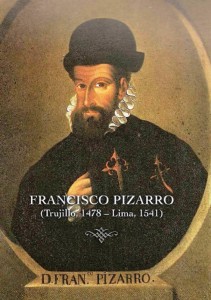
Francisco Pizarro gradually realized that Inés, his wife, younger than him and perhaps even much more cheerful than him given the age difference, was falling in love with one of his pages: Francisco Ampuero. Intelligent as he was and of which he gave many signs throughout his life, he did not want to hinder the love of young people and separated from Inés. The relationship between Inés and Francisco Ampuero was by then known by the rest of the Spaniards living there and the couple's dalliances were known in the absence of Pizarro due to his travels. Once separated from Inés, he married her to Ampuero, although he separated her from her two children, who were given to the protection and care of his sister-in-law Inés Muñoz. The children never again had any relationship with their mother. This new couple formed by Inés and Francisco Ampuero loved each other very much, they had children and the descendants of this union are still alive today. Among others, a very well known literary man and all his family descend from this line.
Pizarro, once separated from Inés, was united with a cousin of Atahualpa: Angelina Yupanqui or Cuxirimay Ocllo, of whom I have spoken a little earlier. Cousin, by double, of Atahualpa. His father was Atahualpa's maternal uncle and his mother was Atahualpa's maternal aunt. They were also from the northern highlands. Angelina had been designated by Huayna Capac, her uncle, to be the wife and mother of the children of Atahualpa, her cousin. They were the children of two brothers and two sisters. But in no way was Angelina part of the "Atahualpa family" either.family" o "panaca" real. From Angelina were born the third and fourth sons of Pizarro, Francisco and Juan Pizarro Yupanqui. All their descendants carried, therefore, the blood of the Incas.
These second sons of Pizarro, were not recognized by Pizarro. Probably Pizarro did not have time to make a new Will, after the last Will that he granted in Chivicapa on June 27, 1539. That was the year in which Francisco -the eldest son of this second marriage- was born in Cuzco. Juan was born in Los Reyes, between 1,540 and 1,541. Francisco Pizarro, his father, was assassinated in Lima on June 26, 1,541. Both carried blood of a brother of an Inca and of an important indigenous woman, but not pure Inca.
It could also be thought that Angelina was part of the ".lot"The women of Atahualpa who were handed over as part of the famous ransom. This is how the chronicler Cieza de León relates it, without mentioning her name, when he says that "the women of Atahualpa were given up as part of the famous ransom.Atahualpa's wives and wives gave themselves up...". Ines de Muñoz, Pizarro's sister-in-law, relates in her diary that Angelina was highly appreciated by Pizarro and that at the end of her life she had better manners than the Spaniards who were beginning to arrive in this Kingdom.
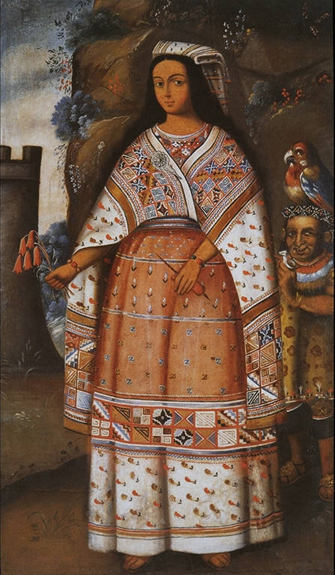
Manco Inca was half brother of Inés and Angelina, but being Manco Inca from Cuzco and Inca by paternal and maternal blood, it is very probable that he looked with certain suspicion the fact that these princesses of the North region of Peru were so close to Francisco Pizarro.
Having been formed in the families of the imperial Cuzco, where everything was politics and treaties between the various ".panacasThe "Incas" who descended from the Incas, surely quickly assimilated the situation of these regional princesses and understood the role they were playing.
If at any time he had hidden these thoughts within himself, they were certainly confirmed when Inés, Pizarro's first wife, asked her mother, Cacica Cuntur Huacho, to come to Pizarro's aid. The mother managed to get several tens of thousands of soldiers to support Pizarro who, in Lima, was surrounded by Manco Inca's General, named Tupa Yupanqui.
Manco Inca, most likely thought that the "regional" princesses would not support him, who continued to treat them as such, and yet they would support Pizarro, who had made them his wives.
From the perspective of history, Manco Inca is not seen to be very attached to any bloodline other than his own, much more complete and fuller than that of the aforementioned regional princesses. Each one played his own game and it was a game of life and death.
Manco Inca had been an important ally of Francisco Pizarro and supported him in the internal struggles between the Incas, fighting against the forces of the Quisquis who had been General of the Inca Atahualpa. The internal fighting among the Incas reached such a point that Quisquis himself was assassinated by his own soldiers, who refused to continue fighting the Spaniards.
Manco Inca tried to maintain agreements with the Spaniards with the purpose of being able to have an intelligent mutual coexistence, which comes to prove the recognition and respect on the part of Francisco Pizarro towards him. But everything went down the drain when Francisco Pizarro decided to go out to pacify and conquer new territories, leaving the control and government of Cuzco in the hands of his brothers. Gonzalo, John y Hernando. They disregarded Francisco's advice, betrayed Manco Inca and were driven by their desire to get their hands on as much gold as possible in order to retire rich.
Francisco Pizarro, who was a statesman to the letter, had plans, he was a visionary. His brothers, brave and fierce as the most, like the rest of the Spaniards who arrived with Pizarro, had left hundreds and thousands of lives behind to reach Cuzco. Now that they were there, with Manco Inca, all they wanted was gold. Probably more than one, including Pizarro's brothers, wanted a lot of gold and to return to Spain as soon as possible. No wonder. If any were left of the men who left Panama with Pizarro (most had already died, had returned without fame or glory to Panama, or had been left along the way as garrisons to watch over a route of retreat) they had gone through many hardships.
Up to that point they had not been attacked by the local Indians. But that does not mean that they did not still have the most difficult part of the adventure ahead of them: to climb from the coast to Cajamarca they had to walk uphill through the Peruvian Andes. And that's saying a lot. They had to cross on foot, or on horseback if they wanted to walk, carrying armor, shield, helmet, breastplate plus sword or spear, if not also some of the first muskets that were super heavy. It was undoubtedly an arduous mission. But to cross in such a way mountains that reach 5,000 meters high, where the lowest pass is at 3,800 meters... is not an easy thing to do. You are short of breath, you faint, you get dizzy, your head hurts, your heart beats a thousand... Today these symptoms are well known and are called altitude sickness. Back then, this "altitude sickness" was not known.
They were able to do so because Atahualpa, who had known of their arrival since they set foot on the Peruvian coast, sent them bearers - in the style of the Sherpas who help mountaineers climb Everest - and llamas to carry the bundles. Hundreds of indigenous bearers. All the Spanish chroniclers relate this part, and also, incidentally, relate how the Inca sent emissaries who spied, above all, on the number of Spaniards accompanying Pizarro.
This does not detract one iota from the courage, stubbornness and determination of these adventurers. Gold? fame? converting infidels? They were men of their time and you'd have to be there to understand. At a basic level it was probably a mixture of gold and survival... and in leaders, like Pizarro, it was more than gold. It was a new life, recognition, and a prime social and political position.
Manco Inca, who had come to be imprisoned, chained and humiliated especially by Hernando Pizarro, aware of the greed of the Spaniards for gold and silver, played with them, deceived them and took advantage of all that to escape. In fact, he became their worst enemy. In 1536 he was on the point of expelling the Spaniards from Cuzco with an army of tens of thousands of Incas, but in the end he did not succeed. The tens of thousands of Inca warriors - privileged Incas, not blood Incas - who accompanied him, had to return to their fields at harvest time. If they did not return... the food would spoil in the fields and there would be famine. They withdrew therefore in good order from the encirclement of Cuzco and left Manco with very depleted forces.
Hernando Pizarro in an absolutely epic and desperate confrontation, when they had practically lost everything, managed to take the fortress of Sacsayhuaman -assault in which his brother Juan died as I have described before- and managed to maintain Cuzco. In the capture of the fortress, the heroism and the death of the Inca warrior known as Cahuide of whom the chronicler Pedro Pizarro said: "....one could write about him what one could write about some Romans..."
After the abandonment of Cuzco, the army of Manco Inca had been decreasing. His main defeat was that of his lieutenant Quizu Yupanqui in their attempt to take the city of Lima in 1536. Lima was saved due to the arrival of thousands of troops sent by the Cacica Cuntur Huacho. And also it influenced in this victory of Pizarro the arrival to the port of Callao, near Lima, of a Spanish expeditionary that had brought two ships from Panama with near 300 Spaniards each one. These soldiers replaced, in some way, to the near three thousand that had left to help the besieged in Cuzco and that never arrived because they were killed in the road, as I have counted.
Pizarro quickly bought the ships from the Spaniard and gave him a small fortune in gold to return to Panama and leave all his men behind.
History, sometimes, is not only the sum of soldiers and the accumulation of bravery.
Pizarro's alliances with all the tribes he met along the way, as he knew well had worked for Cortés in Mexico for 35 years, helped him enormously in his enterprise. With this strategy, he added an army of tens of thousands of supporting Indians, especially from the Cañaris, Chachapoyas and Huancas tribes.
These are the most important peoples who supported the Spaniards on their way to enter and control the Cuzco of the Incas. Later they would also help them in the control of extensive areas of the Viceroyalty. For a long time, these tribes were exempt from paying tribute to the King in return for their support against the Incas.
Today the customs of the Huancas and Chancas are in fact very different from the customs of the men and women of Cuzco, not to mention ethnic issues such as clothing, food, festivals. Even in matters such as biotype and phenotypic characteristics they are certainly different. Neither the hundred years of conquest over them by the Incas, nor the more than five hundred years that have passed since then, have managed to unify them.
- The Cañaris, of what is now Ecuador, they were a group practically in the jungle zone. They were conquered by Huayna Capac and Atahualpa after very hard campaigns. The Incas burned entire villages until they subdued and subdued them.
- The Chachapoyas, located in the northeastern region of present-day Peru, almost the jungle region, were and their descendants are a very particular people. They bore no ethnic or racial resemblance to the local Indians. They were white and larger than Andean men. Their dwellings, dress, burials, mummies, funeral rites, tombs, etc. are very different from those found among Andean men. Their fortresses, very complicated, very well thought out for defense, have corridors where only one man passes between high walls and three successive defensive rings. They are reminiscent of some Hittite fortresses of the near east. They resisted long before being conquered by the Incas and Huayna Capac, the father of Atahualpa, carried out a great scolding with them. Appealing to deception tactics, the Chachapoyas had ambushed a brother of Huayna Capac who was very dear to him and had eliminated him and his more than 5,000 warriors. The Chachapoyas were and are, of course, very brave and tough.
- Finally, the Huancas and perhaps even the Chancas.... the former an Andean people from central Peru and the Chancas, somewhat further south, bordering the Inca peoples. These Chancas had attacked Cuzco many times. It was Pachacutec who turned the surrounding stones into soldiers and broke up the Chanca advance. Seeing this, his men took thrust and attacked against what was left of the Chanca army. They did not leave one alive. Then they razed the Chanca villages that had dared to attack Cuzco. They left no stone unturned. The Incas were not "soft hand"and nothing saintly. Men of war is what they were.
But let us return to Manco Inca. In 1537 he sought an alliance with Diego de Almagro who, on his return from Chile, confronted the Pizarros. That alliance did not work well because his half-brother Huáscar Tupac Paullu Inca -son of Huayna Capac - was already an ally of Almagro and was the one who was trying to take over the MascapaichaInca tassel or crown.
Manco Inca tried soon after to negotiate directly with Paullu Inca, but the latter refused: he had already been named Inca Emperor in Cuzco - which had been taken by Almagro from the Pizarro family in 1537 - as Inca ".officer".
The bulk of Manco Inca's army had returned to their fields to harvest. It was Inca custom not to fight in harvest or sowing seasons.
Alongside Manco stood the elite of his army: those who had been trained to serve the Inca directly, the members of the "panacas"or main families.
As in the cases of the European nobles of noble ancestry, their training was dedicated from an early age to the arts of war and politics. The education of these young warriors of pure Inca blood was very similar to that of the Spartans of Leonidas: races, jumps, fights, survival of the fittest, etc. The heir to the Inca crown - something that is a subject that some professional researchers could discuss for several decades - his father sent him at a very young age to a general with great experience in campaigning. There he learned to negotiate, attack, subdue and govern.
All "panacasThe "Incas" or imperial families descended from one of the Incas preceding the current one. So in all these families was the glory of their ancestors and they had a faithful reflection to imitate. Just as Atahualpa died, so died Tupac Amaru I. Looking at his father the Sun God and asking him to receive them. Knowing that they would return soon. This is how Atahualpa explained it, this is how the chroniclers who saw the young Inca Tupac Amaru die relate it. These Incas of imperial blood were prepared as warriors, conquerors and men of battle. This type of special troops were the ones that withdrew with Manco Inca from the siege of Cuzco.
When the Incas withdrew, the Spaniards made a mistake: they thought that Manco Inca was defeated. They did not know that the support troops, the non-professionals, had been withdrawn and that the elite of the army, the "Incas", had been defeated.sealThe "Incas" of the time were retreating in an orderly fashion with Manco Inca to the town of Ollantaytambo.
In all this, Manco Inca had captured alive some of the 3,000 Spaniards who had tried to go from Lima to help the Pizarro trapped in Cuzco. And, evidently, he had captured the weapons of all kinds that these 3,000 Spaniards were carrying. Many horses and even a small cannon included. One of the Spaniards, his name is known, taught the use of the weapons and the cannon to Manco Inca's people.
Many years had already passed since the Spaniards arrived in Peru and the Indians had learned not only the language, but also the customs of the Spaniards. They rode the saddle or the jineta... and in Peru they usually rode the jineta, so presumably the Incas and their horsemen also followed the custom brought by the men from Castile.
Manco Inca and his elite force coming from the "panacas"The imperial soldiers from Cuzco had retreated along with the indigenous people who came from the jungles near Cuzco. These soldiers used bows and arrows, as well as poisoned darts that they threw with long blowguns. They were totally different from the Andean men who used truncheons, slingshots and spears. These "jungle"They had been faithful to the Incas for a long time, who allowed them a great deal of freedom in exchange for military aid when they required it. Likewise, the men of the coast of Peru, especially those of the central-south coast, the Chinchas, were very faithful to the Incas, since they had negotiated and not warred their relationship with them, thus obtaining great advantages in their relations with the Incas. They provided troops, ships for the maritime commerce, food from the coastal valleys, fish, etc. So good was their relationship that the Lord of Chincha was authorized to go on a horseback, as was the Inca. In fact, when Atahualpa entered the square of Cajamarca, Pizarro was puzzled for a moment because he saw two men of great rank, both on golden litters and he doubted which one was the Inca Atahualpa. This is how the chroniclers who lived the moment related it.
Manco Inca retreated to the city / fortress of Ollantaytambo. Hernando Pizarro, unaware that it was only a retreat and not an escape, in view of the Spartan and purely military character of the troops that accompanied Manco Inca, pursued him from Cuzco with about 300 Spaniards and more than 10,000 indigenous auxiliaries (cañaris, chachapoyas, huancas-chancas).
Manco Inca, informed of the pursuit, waited for them and deployed his troops in the hills full of slingers and flecheros. He formed a front to receive the Spaniards. The Spaniards first sent the indigenous auxiliary troops. They fell stunned by slings and arrows that rained down on them from the sides. Hernando Pizarro tried to advance with his mounted men to two places. On one side in support of the troops in the center and on the other, trying to stop the slingers on the left side. The latter turned out to be impossible, as they were placed on stone walls that could only be accessed by very steep steps that the horses could not attempt to climb. In the center it was even worse for them... Manco Inca ordered the irrigation ditches to be removed and flooded the battlefield. The horses quickly became muddy and could not advance. In this way, they were easy victims of Manco Inca's men.
Realizing the fragile situation in which they found themselves, Hernando Pizarro and his men pulled back and managed to get out of the ambush to defend themselves in a remote position until nightfall. In the shadow of darkness Hernando ordered a silent retreat. They were discovered and pursued by Manco Inca's men. Every certain stretch in the flight, Hernando and a group of his cavalry turned back to stop the front ranks of Manco Inca's men and thus allow the Spanish infantrymen to continue walking and withdrawing from the battle. Practically all the auxiliary indigenous troops died at the hands of Manco Inca's men. The casualties among the Spaniards were also very high.
After this victory, Manco Inca retreated to more remote areas of the jungle. He had understood that he should not abuse his luck and that the Spaniards would not fall into the same trap twice. Incas and Spaniards learned at a rapid pace about the ways and customs of their opponents in turn.
In the jungle there were already numerous fortresses built by the Incas, similar to Macchu Picchu: large cyclopean constructions of rock carved with finesse until today not understandable: Choquequirao, Vitcos, Vilcabamba, are some of the names of these fortresses. In all these fortresses and in others that are still hidden by hundreds of years of jungle growth that hides them from our sight, is where Manco Inca and his men, his royal panaca, his imperial family, established the central axis of what would be known as the "Inca Empire".Kingdom of Vilcabamba".
Manco Inca, legitimate heir to the Inca crown, and his descendants ruled for 35 years from Vilcabamba. From there they controlled the entire central-northeastern region of what, on the maps, was the Viceroyalty of Peru. For this reason, and because it is practically a jungle area, the Spaniards were unable to establish themselves firmly in these areas. In addition, from there, Manco Inca and his descendants hindered all the trade that took place in the central Andean zone of the viceroyalty and denied free passage to the north-central zone. In this aspect, the area of influence that the Kingdom of Vilcabamba had is a pending subject to investigate.
The Viceroys could not move freely through all these regions, because of the risk of encountering Manco Inca's men who were permanently on the warpath, and they were not happy about it. The King of Spain sent first the Viceroy Conde de Nieva, then the Governor Lope de Castro and finally the Viceroy Alvarez de Toledo, with special instructions to negotiate, solve, pacify or finish with the Kingdom of Vilcabamba.
There was a long combination of natural and not so natural alliances or mutual support. Manco Inca, the first Inca of Vilcabamba gave refuge to several Almagristas in Vilcabamba, in the unsuccessful attempt to reach Vilcabamba by Diego de Almagro son, called "El Mozo".
They had treaties like that of Acobamba, - made with the Inca Titu Yupanqui, 3rd Inca of Vilcabamba-, there were offers, negotiations - like those that were made with the Inca Sayri Tupac, 2nd Inca of Vilcabamba-, recognitions at the level of the Inca King with the King of Spain -Acobamba-, and finally a very daring and tired incursion towards the heart of Vilcabamba, in which Tupac Amaru I, the fourth and last Inca King of Vilcabamba, would be captured.
The "Rebel Inca"was on the lips of the first Hispanic historians, the chroniclers. And also of historians of the republic and of the XX century. These gave this denomination to Manco Inca: "the Inca".rebel". And his half-brother, Paulo Inca, of rank and position far below Manco Inca, was called the legitimate Inca.
So "legitimate"Paulo Inca was so respected by the Spaniards that his son, Carlos Inca, was the ruler of Cuzco, married a Spanish lady and lived in one of the ancient palaces of the Incas, that of Colcampata, receiving money and privileges. He was well recognized by the Indians and Spaniards.
His son, Melchor Carlos Inca, a mestizo, studied at the Jesuit school in Cuzco (Colegio San Francisco de Borja) and lived surrounded by all kinds of riches because the King of Spain annulled some limitations that had been imposed by Viceroy Alvarez de Toledo on his father Carlos Inca. He was considered to be the best horseman in Peru and "the best horseman in Peru"....for both chairs"which in those times was a lot to say. He married the Spanish Leonor Arias Carrasco, heiress of Pedro Alonso Carrasco, Knight of Santiago. Melchor Carlos Inca was also named Knight of Santiago.
Thus Manco Inca went down in classical history as ".Inca rebel"and Paulo Inca as "legitimate Inca".
However, a few years ago attention was paid to a fact that was known, but had not been properly analyzed: when the Incas of Vilcabamba came down incognito to the city of Cuzco, they were hidden and hosted by Paulo Inca in his palace of Colcampata. This allows us to understand that the "legitimate IncaHe paid obeisance and full obedience to the "...".Inca rebel". There is no doubt that Manco Inca was the highest ranking Inca. It is evident that he commanded even over his half brother Paulo Inca. Paulo Inca did not inform the Spaniards about the visits that the Incas of Vilcabamba made to Cuzco. The submission of Paulo Inca to the Inca of Vilcabamba was a fact.
Another additional fact that marks the difference between the two Incas is that Manco Inca was of an Inca mother. Paulo Inca had as mother a woman who was not Inca, she was not even from one of the main groups of known tributary tribes. His mother belonged to one of the many peoples conquered by Huayna Capac in the Altiplano area (in what is today the region of Puno in Peru, and the area of Lake Titicaca in Bolivia). The fact that his mother was not from "royal blood"It was also what saved his life: let's remember that Quisquis, Atahualpa's general, had eliminated practically the entire "panaca"Huascar (the legitimate heir of Huayna Capac). This is related by Titu Cusi Yupanqui, one of the Incas of Vilcabamba, when writing his memoirs before a Spanish notary. He says that, when eliminating the imperial family of Huascar, women and children included, the blood was so much that it reached the ankles... and that some generals of Quisquis slyly pushed out of the circle of death the children that they knew were not of pure blood of the panaca of Huascar, with the purpose of not having to assassinate them. Paulo Inca owed his survival to the fact of not being part of the royal panaca heir of Huayna Capac.
The question remains as to whether Manco Inca also saved his life because he was outside Cuzco when this massacre took place, or whether his "Inca" was the only one to be killed.panaca"(family) did not touch it because it was not the royal family of Huáscar.
Atahualpa considered that by killing the entire royal family he had already secured the right to the Inca throne. He miscalculated since Atahualpa, as I said before, was of non-Inca mother. There were other children of Huayna Capac born of Inca mothers. It is from this descent that the legitimacy of Manco Inca comes from.
Moreover, when Manco Inca leaves Cuzco to receive Pizarro and propose an alliance, he is accompanied by the representatives of all the royal panacas. That is to say, the total of the Incas of Cuzco saw Manco Inca as the legitimate successor.
It is more than likely, therefore, that the old history books are wrong in saying that ".... on the road to Cuzco... Pizarro appoints Manco Inca as puppet Inca...". It is a common mistake: Manco was named Inca by his peers. It was Manco Inca who went out to look for Pizarro to propose him an alliance. It was Manco Inca who guaranteed him that if he accepted, the road that remained to reach Cuzco was going to be calm and it was going to run without receiving any attack of natives.
Manco Inca could guarantee this since he had left Cuzco with some thousands of Inca warriors -many were Incas of blood and the most Incas of privilege-. On the way from Cuzco to where he met Pizarro, when the inhabitants of different areas saw that Manco Inca was wearing the imperial insignia, they promptly put themselves at his command. Not to obey the Inca was certain death not only for the offender or his family, but for all his people. The Incas had carved out their dominion over the peoples in two ways: by hook or by crook... and by crook.
It is a very rich and well-studied topic, but let us return to the center of our story: the legitimacy of Manco Inca as the true and only Inca and bearer of the blood recognized as the legitimate heir of the Inca Empire.
As we are being able to analyze, the royal blood that will later give origin to the Marquisate of Oropesa to which we referred at the beginning, comes from the line of Manco Inca, and not from the line of Paulo Inca.
The Spaniards knew this well. Philip III granted the title of "Sole and legitimate heir of the Incas"to Ana María Lorenza Coya de Loyola.
Moreover, Ferdinand VI, in the eighteenth century, denied the title of Marquis of Oropesa to a descendant of Paulo Inca. To the highly favored and ultra well received at court, Don Juan de Bustamante Carlos Inca, gentleman of the mouth. For the reader who is not aware of the meaning of "Inca", it is a term used to refer to a descendant of Paulo Inca.gentleman"We would say that he was a courtier, someone with access to the King, someone who saw the King frequently and therefore had the capacity to request and follow up on issues of interest to him. That, roughly speaking, was the profile of Don Juan de Bustamante Carlos Inca, a descendant of Paulo Inca.
Officially he was denied the Marquisate of Oropesa because it was argued that his documents were incomplete and there was some doubt about his direct descent from Paulo Inca. That was not so clear. But the later facts will affirm that the Kings of Spain were always right: the line of Paulo Inca was not the Imperial line, it was not the line of the authentic and legitimate lords and heirs of the Incas. Spain had always negotiated with the main line of the Incas, that of Manco Inca and his descendants: Sayri Tupac, Titu Yupanqui, Tupac Amaru I. And the Spanish Crown knew where the Inca royal blood was: in the line Manco Inca - Sayri Tupac - Beatriz Clara Coya - Ana María Coya de Loyola y Enriquez de Borja.
Manco Inca reigned as a rebel Inca and ended up assassinated in Vilcabamba in 1544 by 7 Spaniards from the forces of the Diego de Almagro who betrayed him, just as they had previously betrayed the Pizarros.
Diego de Almagro was very different from Francisco Pizarro. Pedro Cieza describes him as "....sometimes without restraint, he shook with his tongue..." y Pedro PizarroFrancisco Pizarro's first cousin, said that he was "...a very profane man, with a very bad tongue, who in his anger treated those who walked with him very badly, even if they were gentlemen...."
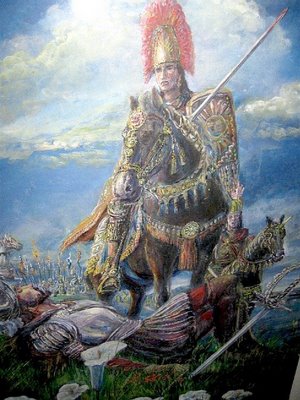
When Manco Inca was stabbed, two of his sons were in front of him: Titu Cusi Yupanqui y Sayri Tupac. Sayri Tupac at that time was five years old. To the traitors it did not serve them of much their betrayal. A few days later, the seven who had killed the Inca were murdered and their heads were exposed in the streets of Vitsu and Vilcabamba.
Sayri Tupac Inca, son of Manco Inca and Culchima Caype, officially succeeded to the throne of his father, although in fact it seems that this was never the case.
Titu Cusi Yupanqui, older brother of Sayri Tupac, seems to be that he was the true heir of his father. Everything seems to indicate that the Incas staged a fiction to make the Spaniards understand that the real Inca was Sayri Tupac and thus to keep away the looks and the bad intentions of the heir.
Titu Cusi did not appear as Inca before the Spanish authorities until after the death of Sayri Tupac.
When Titu Cusi died, he was succeeded on the throne by his brother Tupac AmaruAlso grandson of Huayna Capac and of whom I will speak a little later. All of them were brothers of Sayri Tupac, they were sons of the Manco Inca and grandsons of Huayna Capac.
The title of Marquesa de Santiago de Oropesa, as I said at the beginning, was granted by Philip III Sayri Tupac's granddaughter, Ana María de Loyola y Coya-Inca.
Although at the risk of going on at length, let's go into a little more detail about Sayri Tupac's life.
His father, Manco Inca, was stabbed in front of him when he was very young. He remained locked up and protected in Vilcabamba while he was growing up. During those years the Spaniards were bleeding in wars between them and the government of the Incas was in charge of Atoc Supa.
In 1534 Charles V appointed Governor of New Toledo Diego de Almagro, who had arrived in the Americas with Francisco Pizarro but whom the King had not favored in his previous distributions.
Diego de Almagro traveled through the territories that had been assigned to him in search of treasures and finding nothing but deserts and poverty, he decided to occupy Cuzco, considering it to be part of his territories. In the battle of AbancayOn June 12, 1537, Hernando and Gonzalo Pizarro were taken prisoner.
Francisco Pizarro negotiated with Almagro the banishment and freedom of his brothers, but he only tried to gain time. Pizarro did not comply with the agreement and once the freedom of his brothers was recovered, he gave them the command of the troops and together they faced Almagro. Almagro was ill at that time and could not organize the defense. He gave the command of his troops to Rodrigo Ordóñez. The Almagranistas were defeated in April 1538 in the battle of the Salinas. Taken prisoner, Almagro was humiliated by Hernando Pizarro and immediately understood that he could not appeal to the King. Feeling lost he begged for his life and to his plea, Hernando Pizarro responded saying:
You are a gentleman and have an illustrious name; show no weakness. I marvel that a man of your spirit should fear death so much. Confess yourselves, for your death is hopeless..
Gonzalo returned to Quito with enormous difficulties and upon his arrival he learned of the murder of his brother Francisco, on June 26, 1541, at the hands of the men from Juan de Radasupporters of Almagro el MozoDiego de Almagro's son. With the death of Francisco Pizarro they had avenged the death of Diego Almagro.
When Emperor Charles V learned of the death of Francisco Pizarro, he appointed the first Viceroy of Peru to Blasco Nuñez Velawith the task of enforcing the New Laws which were drafted in order to control abuses by the encomenderos against the locals.
Blasco Nuñez de Vela was violent, partial, arbitrary and unintelligent in the exercise of power. That made the Spanish forces installed for years in Peru rise up against him and looked for Gonzalo Pizarro to represent them. The Viceroy went so far as to kill with his own hands to Illán Suárez de CarbajalThis was the spark that ignited the rebellion. The four ombudsmen of the Royal Court of Lima They imprisoned him and on September 18, 1544 sent him back to Spain. But Blasco Nuñez de Vela did not return to Spain. He organized some troops and began a fratricidal war between the Spaniards, which ended with the death of the Viceroy two years later, on January 18, 1546, beheaded on the same battlefield, after his defeat in the battle of Iñaquito.
Charles V, aware of the uprising and in order to regain control of such an important territory, sent to negotiate the surrender the licentiate Pedro de La GascaOn February 16, 1546, he named him President of the Royal Audience of Lima. All this happened ten years after the death of Manco Inca and five years after the death of Francisco Pizarro.
La Gasca in only four years achieved the objective. He negotiated with the Spanish rebels who for the most part surrendered, abandoning Gonzalo Pizarro when the encounter with La Gasca's forces took place in the battle of Jaquijahuanain the pampas of Anta, near the Cuzcoon April 9, 1548. It was an encounter in which there was no battle. La Gasca had offered pardon and Pizarro's soldiers began to desert. Among the first deserters were Capt. Sebastián Garcilaso de la Vega (the father of the Inca historian) and the oidor Diego Vásquez de Cepeda.
In the midst of the desertions and in view of what was happening in front of his eyes, the Inca Garcilaso tells in the 2nd Part, Book V, chapter XXXVI that Gonzalo Pizarro turned to his Field Master Juan de Acosta and said to him: "What shall we do brother Juan", to which the latter, presuming to be more courageous than discreet, replied:"Lord, let us attack and die like the ancient Romans."but Gonzalo Pizarro replied: "....It is better to die as Christians".
Gonzalo Pizarro, Francisco de Carvajal and all their captains surrendered, were imprisoned in the same camp and subjected to a summary trial. Forty-eight of the rebels were condemned to death, among them Pizarro and Carvajal. Many others were punished with floggings, banishment, work in the galleys and confiscation of goods. Those condemned to death were beheaded at dawn, with the exception of Carvajal, who was hanged because he was a commoner. The heads of Gonzalo and Carvajal were sent to Lima and exposed perpetually in the Main Square, inside iron cages. Gonzalo's headless corpse was taken to Cuzco and buried as alms under the main altar of the church of La Merced, where the corpses of Almagro the Elder and Almagro the Younger were already buried. Less than seven years had passed since the death of Francisco Pizarro.
Once the work of pacification was considered finished, on January 27, 1550, Pedro La Gasca set out on his return trip to Spain. He was named Bishop of Palencia, a dignity that was linked to the County of Pernia. Curiosities of life, the present Countess of Pernia is the mother of my wife.
After La Gasca's departure, he was called to the position. Antonio de Mendoza y PachecoHe was appointed Viceroy, in view of the organizational capacity he had shown as Viceroy of New Spain (Mexico). However, he did not live long to tell the tale. Only ten months, due to his advanced age and poor health. Even so, important measures were taken. Some of them did not please the Spanish encomenderos at all, such as the suppression of the "personal service" of the Indians, that is to say, the free use of the Indians' labor by the encomenderos. This measure had been ordered from Spain a couple of years earlier, and furthermore, Mendoza had brought in a Royal Decree The order was not enforced in Peru for fear of the outbreak of revolts. However, the magistrates of the audience of Lima resolved that the application of such measure should not be postponed any longer, and on June 23, 1552 they issued a provision abolishing the unpaid work of the natives, with the full approval of Mendoza. He was the son of the first Marquis of Mondejar and II Count of Tendilla, known as the Great Tendilla.
Shortly thereafter, the Marqués de Cañete became Viceroy of Peru. He was from June 29, 1556 to March 30, 1561. The situation among the Spaniards was already normalized and controlled. The effort of Don Andrés Hurtado de Mendoza, Marquis of Cañete, was centered in the control of the situation with the Incas. They were years of constant skirmishes between both sides.
A curious and anecdotal fact that could have changed the course of the history of the Viceroyalty of Peru and that few people relate is that a few months after being crowned King, Philip II appointed as Viceroy the most trusted person for him and for his father, Charles I of Spain and V of Germany -who would die that same year-: Diego de Acevedo.
Diego was the son of the Archbishop of Toledo, Alonso de Fonseca y Ulloaknown as Alonso III, who succeeded Cardinal Cisneros as primate of Spain. Diego's father was the one who baptized Philip II. Diego came from a family with a long religious tradition: his father was Archbishop of Santiago de Compostela, his grandfather, Alonso de Fonseca y Acevedo was also Archbishop of Santiago de Compostela and Archbishop of Seville -by the way, it is with him that the famous saying was born that ".he who left Seville, lost his chair"because he refused to return to his uncle the archbishopric of Seville that the latter had exchanged for the archbishopric of Santiago in order to comply with a sentence of separation from Santiago. This uncle of Diego's grandfather, Alonso I or Alonso de Fonseca y Ulloa, was archbishop of Seville -temporarily also of Santiago-, and was the one who married Diego's grandfather, Alonso de Fonseca y Ulloa. Henry IV of Castile in her second marriage, with Joan of Portugal or Joan of Avis. His father had been Royal Advisor to Juan II of Castile.
Diego de Acevedo dedicated himself above all to personally transfer, far from prying eyes, the private and confidential mail exchanged between Prince Philip and his father Emperor Charles V, having the responsibility of communicating by word of mouth those information that, for security or prudence, both correspondents did not put in writing. This confidentiality with the Royal Family earned him the esteem and appreciation of the sovereigns. The prince proposed him as interim ambassador in Rome, until the Marquis of Sarriá took possession of the office (December 7, 1554). Likewise, when Charles V renounced the kingdoms of the Crown of Aragon, he gave power and dispatches to Diego so that Philip II could take possession of them. Protected by the Duke of Alba, he returned to his office of steward at the Court from 1554 to 1556. That last year he was named treasurer general of the Crown of Aragon, a position he held until 1558, when the Count of Chinchón was named to occupy it because he was chosen by Philip II to hold the position of viceroy of Peru. In June of that year, however, he died suddenly. The ships to embark him were ready in Laredo, but he never left Valladolid, where he had gone to pick up the necessary instructions and dispatches to take possession of the post.
Faced with the Viceroy's very serious threats to invade Vilcabamba by force, where Sayri Tupac was hiding, in 1558, he agreed to go to Lima to meet with the Viceroy.
To convince Sayri Tupac, the Spaniards sent Juan Serra, who was Sayri Tupac's cousin. Juan was the son of Beatriz Coya and Mancio Serra de Leguisamo. This Beatriz Coya was daughter of Huayna Capac. She had been married first with Pedro de Bustinza, who was executed by La Gasca in 1549. Years later she was married to the tailor Diego Hernandez. I speak about it a little earlier in this same post.
A curious fact about this second marriage of Beatriz Coya reflects the way things were lived at that time. The marriage with Diego Hernandez was evidently forced. Even the Bishop of Cuzco and a brother of his intervened so that the princess accepted. When the marriage was finally celebrated, presided over by the Bishop, when the Bishop asked her if she accepted Diego as her husband, she answered in Quechua: "...".Ichach munani, íchac mana munani"which means "maybe I want to, maybe I don't want to". And they married her.
Meanwhile... what had happened to Francisco Pizarro's children? In particular with his daughter Francisca, the only one of the legitimate heirs who finally survived. The story of Francisca's life is one of the most surprising and unknown in the history of the arrival of the Spaniards in America.
Orphaned as a child, she saved her life in the attack on her father's palace thanks to her aunt Inés Muñoz, who took her out in the middle of the battle and hid her with her brother. Upon the death of her brother Gonzalo, Francisca became heir to all the goods and rights of her father, Francisco Pizarro. Francisca Pizarro Yupanquias well as his brother Gonzalo, had been named legitimate heirs of the Marquis de la Conquista by Royal Decree given in Monsoon on October 12, 1537, by the Charles I of Spain and V of Germany.
For fear that she might marry her own uncle Gonzalo -who apparently tried to do so- and that both would dispute the rights acquired from the Spanish Crown by her own father, at the request of Pedro La Gasca, she was taken to Spain in October 1551. The idea was that there would be no Pizarros left in Peru.
The King had ordered that "all"The children of caciques, nobles, Incas, etc. were sent to Spain. It was a difficult task because, as we have already said, by custom, the Incas had many children. But it was accomplished as best as possible. The theory of the King's advisors was that if one was the son, grandson or nephew of an Inca... better to live in Spain with all the honors, than to live in Peru with all the risks of one day wanting to regain control of the Empire. In this way, many descendants of Incas were sent to Spain and in Spain they were educated and honored with military orders such as that of Santiago, captaincies, etc.
FranciscaFrancisco Pizarro's first-born daughter, on her trip to Spain was accompanied by Francisco Ampuero, her stepfather, of whom I have spoken previously. The second husband of her mother, Inés Huaylas.
When Francisca arrived in Sanlúcar de Barrameda, King Philip II sent her a letter asking her where she would like to live. She was requested by her uncle Hernando to accompany him in his imprisonment and once in the Castillo de la Mota, in 1552, she ended up marrying him. For years, both fought the Crown for her rights as Pizarro's heiress and she was the one who, together with her husband and uncle, Hernando Pizarrohad the Palace of the Conquest in Trujillo, Cáceres.
When Hernando's imprisonment was over, they moved to La Zarza -today Conquest of the Sierra-. After years of efforts and lawsuits for the Crown to recognize her rights, she recovered all her goods and rights and once she was Hernando's widow, being now free, she remarried. This time with Pedro Arias Portocarrero. In November of 1581, the eldest son of the II Counts of Puñonrostro and brother of Francisca Sarmiento, the wife of his own son Francisco. That is, she married her son's brother-in-law. She changed her residence to Madrid, became close friends with the wife of Philip II and lived a life of luxury until her death in 1598.
But Francisca was not an heiress of the Inca Empire or of the goods of the Incas and their privileges. There was much better "blood"With full right, Inca and Hispanic, to ask for that privilege that the right that attended Francisca. From the blood of the Inca Empire will come the line of Huayna Capac - Manco Inca - Sayri Tupac - Beatriz Clara Coya - Ana María Lorenza Coya de Loyola.
Let's go back to Sayri Tupac's delivery, achieved by his cousin Juan Serra.
Sayri Tupac surrendered, he also accepted to be baptized with the name of Diego and to do so, he had to leave Vilcabamba. He was named Prince of Yucay and was given the Yucay Valleyin the photo below, together with the income it generates.
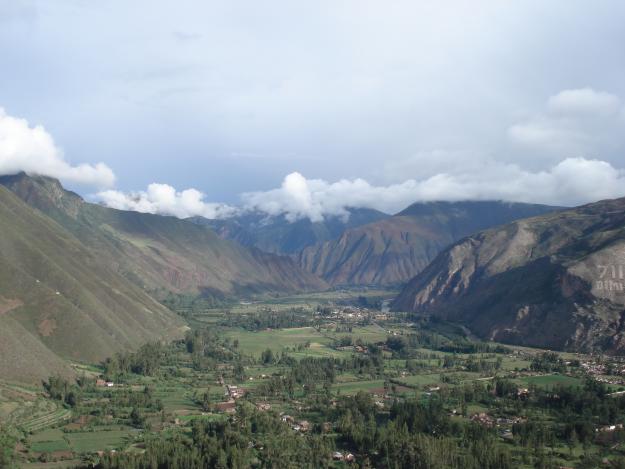
Seen from today's perspective, it was a large property, but if we look at it from the perspective of the time... the Yucay Valley was an encomienda that had been given a few years earlier to Francisco Hernández Girón for his war merits against the Inca. For his wrong political decisions, years later, the Marquis of Cañete confiscated it. This happened two years before sitting in Lima with Sayri Tupac.
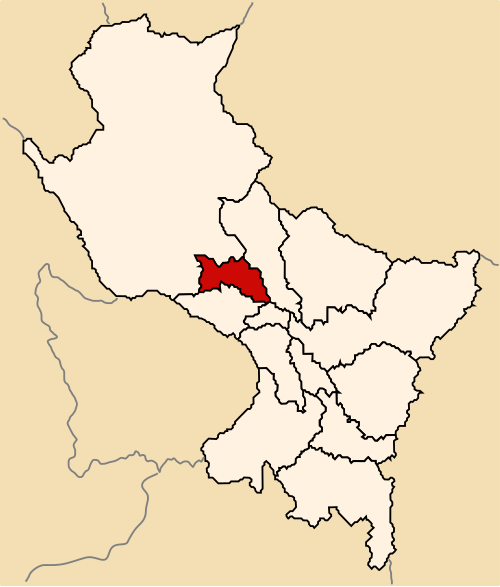
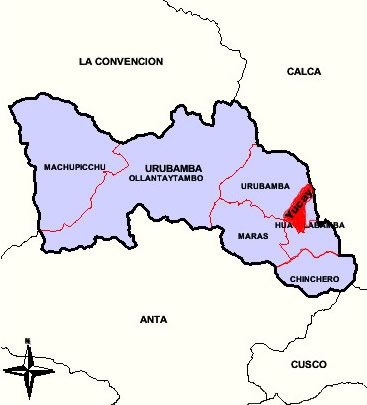
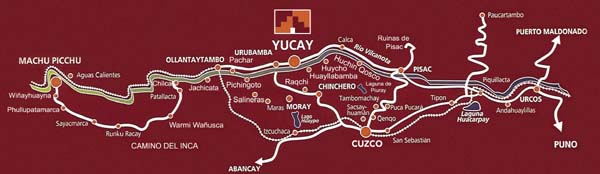
Francisco Hernández Girón, the former hero and battle companion of the Spanish adventurers, had become a rebel and enemy of the King. He had taken up arms against the Spanish Crown and had confronted the authorities. Hernández Girón could be said to have been a great soldier, but he had very bad fortune in choosing sides once he arrived in Peru. First he fought on the side of the First Viceroy of Peru. Blasco Núñez Vela(May 15, 1544 to January 18, 1546), but he did so when the latter no longer had the authority of the Royal Court of Lima in view of its inadequacies in the enforcement of the New LawsThe laws that had been enacted in an attempt to put an end to the abuses committed against the indigenous people by the encomenderos. He then sided with Gonzalo Pizarro and finally went against the Corregidor of Cuzco himself, whom he stopped. He gathered an army, won a couple of battles, even defeated in a really surprising way the very Alonso de Alvarado on May 21, 1.554 in Chuquinga, present day province of AymaraesAlvarado brought an army with more than 1,200 men and a long experience of combat and victories.
Alvarado himself was wounded in the battle, was able to flee to Lima and there he spent the next two years, wrapped in a melancholy that some even attributed to madness, until he died in 1556 without having recovered from having lost that last battle between Spaniards.
Meanwhile, in the same year 1554, Hernández Girón faced a new battle with the official forces in Pucara, this time he lost the battle although he also managed to flee, but he was captured a few days later, condemned to death, executed in December 1554, his head nailed to a pillory, his properties confiscated and his houses demolished and sowed with salt. In this way the Encomienda of the Yucay Valley had been recovered by the authorities.
When Sayri Tupac, two days after arriving in Lima, on January 7, 1558, eating with the Archbishop of Lima, learned that the Yucay Valley was all they would give him, he tore a thread from the tablecloth that covered the table where they were eating and, to the surprise of his hosts, asked them if they would accept that thread instead of the whole tablecloth. Without giving them time to answer, he told them that that was exactly what they were doing with it: they were taking away an Empire and giving him a shred.
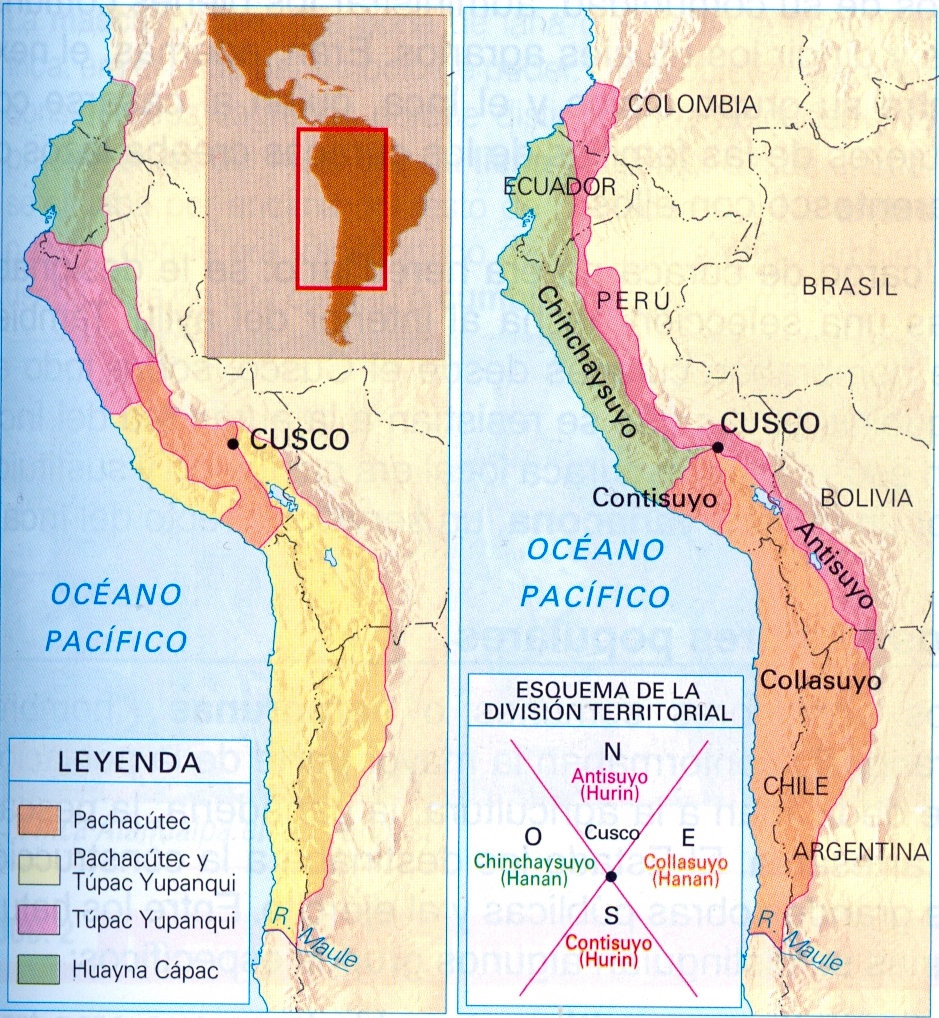
Even so, he returned to Cuzco, was baptized, married his half-sister Cusi Huarcayfor which he requested and obtained a waiver of the Pope Julius IIIHe legalized from the point of view of the new jurisprudence the daughter they had previously had together, baptized her with the name of Beatriz and retired to his new territories, in the Yucay Valley.
A few months later, at the age of 43, he died in Yucay, apparently assassinated by Apu Chillche, chief of the Cañaris.
The Cañaris were warriors that in times of the government of Huayna Capac, father of the Manco Inca and grandfather of Sayri Tupac, had formed the Imperial Guard, but that to the arrival of the Spaniards they went over to the side of the invaders. It seems that they helped defeat the army of Manco Inca when he was about to take Cuzco and defeat the forces of Hernando and Gonzalo Pizarro. The Cañaris were in charge by Manco Inca of the defense of Sacsayhuamán.
As compensation for the taking of the fortress Gonzalo Pizarro granted to his chief Apu Chillche the administration of the goods of Yucay. Everything seems to indicate that Apu Chillche did not accept that it was Sayri Tupac who became the new owner by delivery of the Viceroy and murdered him.
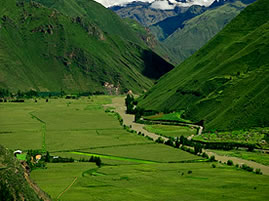
The Yucay was an especially appreciated valley. Before Huayna Capac also the great monarch Pachacutecname that means "the one who moves the earth"the greatest of all the Incas, conqueror of the Chancas, inhabitants of the current Apurimacorganizer of the Inca Empire, creator of the Tahuantinsuyo and promoter of places such as Machu Picchu, Sacsayhuaman, Tambomachay, Tipon o Qorikanchaand his father Huiracocha Inca had shown their interest and appreciation for the Valley by making both conquests and constructions.
Yucay was also the place of resistance of the last Incas of the Tahuantinsuyo. It was a center of agricultural production with a magnificent microclimate and for which the ruling classes had always felt a special predilection. Still today there are the remains of the palaces and terraces built there, some of which were built with stones carried on the backs of llamas from Ollantaytambo and the Lares Valley.
When Sayri Tupac died, his daughter Beatriz Clara Coya was admitted to the newly founded Santa Clara Convent in Cuzco and separated from her mother, who was left in near poverty because of the mismanagement of her assets ordered by the Count of Nievafourth Viceroy of Peru (from April 17, 1561 to February 20, 1564, when he died).
The Count of Nieva, Don Diego López de Zúñiga y Velasco, had been companion of battles of Carlos V and member of the retinue of Felipe II in his journey through Flanders and Germany before ascending to the throne as Felipe II. For the confidence that he had with him the King named him IV Viceroy of Peru, with the assignment to put order in the mess organized by Blasco Núñez de Vela on account of the New Laws and that neither Antonio de Mendoza, son of the Marquess of Mondéjar and II Viceroy (September 23 of 1.551 to July 21 of 1.552 in which he died), nor the Marquess of Cañete, III Viceroy (June 29 of 1.556 to March 30 of 1.561), had achieved.
While all this was happening, in 1562, after Sayri Tupac had been assassinated, Titu Cusi Yupanqui appeared on the scene as Inca monarch, attacking the neighboring encomiendas along the Urubamba and Apurimac rivers and attacking all those people, soldiers or civilians, who crossed the roads.
Titu Cusi, upon learning that Sayri Tupac had died, named himself as Inca in Vilcabamba, "imprisoned" the very young Tupac Amaru, confined in the house of the Acllas or princesses dedicated to the cult of the Sun, and called him a "fool" in public.
Titu Cusi Yupanqui ruled from 1561 to 1570. Eleven years.
The reduced number of Inca forces -recluded and protected by the accidents of nature in Vilcabamaba- had never quite accepted the new Spanish domination and once Sayri Tupac died, a new Inca appeared, very willing to fight and confront the new occupants.
This Inca force was reduced with respect to the size they had before. The Inca fortresses in the Vilcabamba area were several: Choquequirao, Vitcos, Espiritu Pampa -which is the real Vilcabamba of the Incas- and some others, which were scattered throughout the area. The surrounding villages served the Vilcabamba Incas. These Incas, who for 35 years kept their kingdom intact, although very reduced compared to what they had when they were Empire, had the same system of the Inca kingdoms: organization by groups, ethnicities, labors, etc. Their influence, we could say their radius of reach, reached up to a third of what was officially the Viceroyalty of Peru. The Incas controlled the entrances to the jungle. And the jungle, unknown and hard was, more or less, that third we are talking about. All these fortresses are not in the highlands, puna, Andean zone; they are in the high jungle zone, also called Ceja de Selva. The most tangible example of this ecosystem and its full development by the Incas is the world famous Macchu Picchu. We would not dare to say that it was part of the Vilcabamba network, but the place, the distance, the type of constructions, etc. do not make this idea impossible.
To this let us add that the indigenous people of the jungle, the "antis" as the Incas called them, were many, and of very varied tribes. And these were old allies of the Incas. In fact, the presence of the Incas in all the zone of High Jungle could not have passed unnoticed for the Antis since Tupac Amaru I, when he was retiring of Vilcabamba, went via the rivers that enter in the Jungle, toward the deepest territories of the "antis", land of friendly tribes where he was going to take refuge and to look for support.
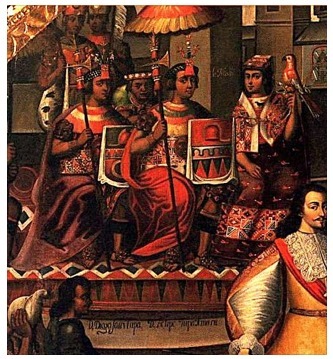
This new active front became something unexpected for the Spanish invaders, which also coincided in time with the death of the Count of Nieva and made living conditions very difficult for all those present.
The Spaniards began negotiations with Titu Cusi in order to find a peace agreement. Apparently Titu Cusi accepted to convert to Christianity and to accept to become vassal of the King of Spain, although he also claimed his recognition as successive Inca, the increase of the limits in the territory of Vilcabamba and the marriage of his son Quispe Titu with his cousin Beatriz, daughter of Sayri Tupac. It was all a proposal of Treaty between two dynasties that considered themselves and were, great dynasties: the Inca and that of the Spanish Austrias.
An agreement was reached, because that was the will of both parties and the capitulation of Titu Cusi was signed on August 24, 1566 in the valley of Acobamba.
It is important to emphasize that many of the Inca's subjects, even Cusi Huarcay herself, his sister-in-law and widow of Sayri Tupac, strongly recommended him not to do so because they thought that the Spaniards were deceiving him.
The Incas did not consult their decisions. They were children of the Sun. Omnipotent and full power. No one could look them directly in the eyes, everyone withdrew without turning their backs to them. The hair that was cut, the spit, etc., was collected. They only wore a garment once. As the chroniclers relate, if they stained themselves while eating, they were immediately changed into a different garment. Even the highest officials presented themselves before them with a weight on their shoulders to show humility, as the Spaniards had seen since Atahualpa.
Cusi Huarcay, Inca of royal blood, full, by father and mother, sister of her husband, the already dead Sayri Tupac, who had already been recognized as such by the Spanish Crown, most certainly strongly opposed the treaty because:
a) It was against his pure blood over the "half blood" represented by Titu Cusi.
b) It was against the treaty made with her husband Sayri Tupac.
c) It was a treaty where a "half-brother", of non-Inca woman - as maximum of Palla, important woman, but of inferior level to Cusi Huarcay-, arrogated a preponderant role on those who if they had full royal blood, that is to say the prisoner Tupac Amaru I.
There was great indignation in Cusi Haurcay with that Treaty of Acobamba. By virtue of it, she was being deprived of the Haciendas that had been assigned to Sayri Tupac, her deceased husband.
The Count of Nieva, Viceroy of Peru, had died and his successor, who would be Francisco de Toledo, had not yet been named, which made the Incas even more suspicious.
The reality is that the Spaniards never betrayed him, but they were getting more and more presence and information of what was happening in Vilcabamba. Meanwhile, within Vilcabamba, discontent grew among the Inca warriors, who did not stop carrying out sporadic attacks outside their assigned territories, carrying out pillaging, kidnappings and murders.
In this state of affairs and while the King of Spain was confirming the Treaty signed in Acobamba, which sought to achieve a true and lasting peace, the new Viceroy arrived in Cuzco. Francisco Álvarez de Toledo as fifth Viceroy, a position he held from November 26, 1569 to September 23, 1581.
He was a great organizer of the administration and traveled more than 8,000 kilometers in five years to get to know the viceroyalty in its entirety and ensure good administration and respect between Spaniards and Indians.
Before arriving in Cuzco, he made a long journey throughout the Viceroyalty to get to know it in its entirety, traveling more than 8,000 kilometers in five years, trying to ensure good administration and mutual respect between Spaniards and Indians.
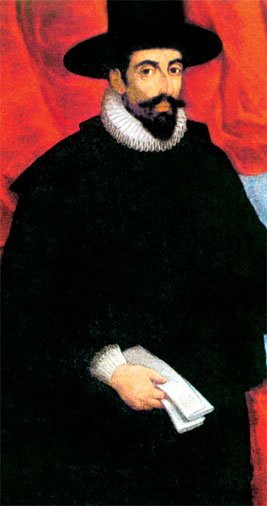
One of his first tasks was to resolve the hostilities with Titu Cusi. To achieve this, he agreed to send to Vilcabamba the Augustinian friar Diego Ortiz, together with another Augustinian friar and a corregidor with ample powers to reach peace with the Inca and with the message that there would be no revenge in spite of all the damages that his men were inflicting. Titu Cusi, very influenced by his councilors, did not seem to accept the peace and was dragging on in his discussions with the Augustinian friar. All these conversations coincided with the rainy season. Apparently Titu Cusi caught a cold and Diego Ortiz, who in addition to being a friar and the Viceroy's ambassador was also a doctor, applied the typical remedies of the time to treat the illness. But Titu Cusi's illness was much more serious than a cold and he died quickly. This sudden death, together with the discontent among his trusted people, made them suspect that Titu Cusi had been poisoned by the friar and without much thought, especially instigated by Titu Cusi's mother, they killed Friar Diego Ortiz, together with the notary Martín de Pando, whom they also suspected.
These sudden deaths activated all the problems that were latent among the Inca warriors. They ignored the succession commitment with Quispe Titu, signed and accepted in the Agreement of Acobamba of the summer of 1.566 and they named Inca to Tupac Amarothird son of the Manco Inca.
The new Inca had never been prepared to reign and even less to fight, although he had had better succession rights than his predecessor Titu Cusi.
All young men from noble families had their children pass through the warachicu. The huarachico or warachicu was the initiation party in which the young men received, after sporting tests of running, wrestling, bow and sling, the military insignia and signs, the pants or huaras and the ojotas. In addition, their ears were pierced to wear the large earrings distinctive of their rank. That day the people danced repeatedly and tirelessly the taqui called huari, instituted by Manco Capac, which lasted an hour and the young cadets were presented before the Inca who exhorted them to "be brave warriors and never turn their feet back". http://incario.wikispaces.com/Ceremonia+de+Huarochico
A study of dates gives us more light:
1545. Manco Inca dies. Last day that he could procreate his third son Tupac Amaru I. True fact and accepted by all.
1558. Titu Cusi is named Inca. At that time, Tupac Amaru I is at least 13 years old.
1572. Tupac Amaru I is executed in Cuzco. He already has a 3-year-old son.
From this we conclude that the age of Tupac Amaru I, at the time of his execution, is at least 27 years old.
At 13 years of age, he had not yet gone through the "warachicu" ceremony and had not been recognized as a male, with full rights.
Titu Cusi takes advantage of this and sends him to live with the "Acllas" -the virgins of the Sun- in the fortress of Vitco (or Uiticos as the chroniclers wrote it). The question is, why not eliminate him? An Inca, someone immersed in the politics of imperial clans, was not going to make faces of disgust to clean the way to his full assumption to the throne. If Sayri Tupac Tupac Amaru died and Tupac Amaru disappeared, Titu Cusi's rights and his right to take the Inca crown in spite of not being the first line option, why doesn't he eliminate Tupac Amaru and send him to the house of the Virgins of the Sun?
Most probably this young Tupac Amaru grew up there since he was a child. It was thought that he was going to be the next Villa Umo -Great Priest of the Sun- who replaced the Inca in many occasions. Having many Inca women of royal family, if the mother had died more than one aunt would have wanted to raise the nephew with succession rights. It is very probable that Tupac Amaru was from very young living with the Acllas. Sayri Tupac being alive and ruling as Inca in Yucay, his future was not threatened at all. But once Titu Cusi assumes the crown, being 13 years old Tupac Amaru and having lived time with the Acllas, it seems easy that he continued with his housing in that location (Vitcos, not Vilcabamba). What excuse was given for not naming him Inca immediately? His young age was no justification. It is probable that there was a mixture between negotiation and order: you do not die, but you stay there. That is why he calls him "uti" or "bobo". But it is a difficult point to elucidate. With all certainty, the different "panacas" had some interests in favor of Titu Cusi and many others would benefit from the assumption of Tupac Amaru. It is something that remains to be investigated.
He was married and had been educated next to the Virgins of the Sun in the Temple of Uiticos. His brothers never thought he would reign and probably neither did he.
Coinciding in time, the Viceroy sent as emissary of peace to Tilano de Anaya, a Spaniard resident in Cuzco, considered trustworthy by the already by then deceased Titu Cusi. His objective was to try to stop the Inca from taking up arms, accept peace and travel to Cuzco. It had not been easy to find someone willing to take a message to the fortress of Vilcabamba, in the image below, in view of its isolation and the violent reactions of the Incas.
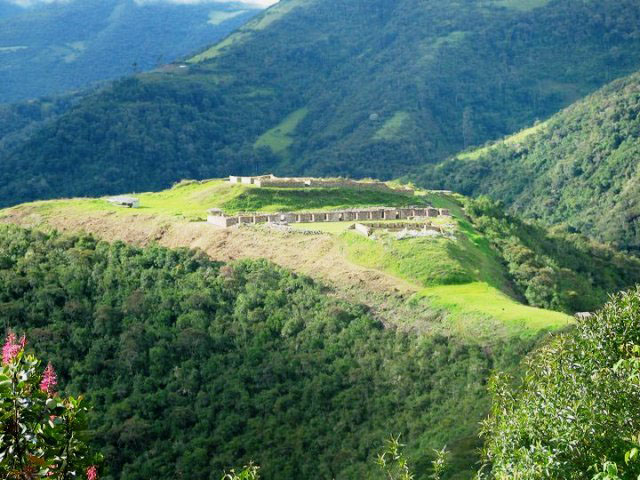
Well, the watchmen of the Chuquichaca bridge, a narrow suspension bridge built of vegetable fiber over the Urubamba River When they saw Tilano de Anaya arrive, they waited until nightfall and when he was encamped, they killed him and his companions. Apparently they had not received any order to do this and they acted on their own initiative for fear that the new Inca would heed the suggestions of the Viceroy's envoy and go to Cuzco to sign a new peace, as his predecessor had signed. They killed the Viceroy's envoy and by all explanation they told Tupac Amaru that they had killed some Christians who were hiding on the other side of the bridge, waiting for him to pass by on his way to Cuzco to kill him.
The spiral of violence began to grow and immediately the Inca warriors began a war of reconquest against the Spaniards, ignoring the Capitulation signed in Acobamba. All this in spite of being far inferior in numbers and armament to the invading force. We can say that they got in a very fast way in what ended up being a real suicidal war.
In March of 1572, shortly after the events described above, they also killed the Viceroy's commissioners who carried the royal decree approving the Capitulation of 1566. With this assassination they broke all possibility of peace with the Spaniards.
On Palm Sunday of 1572 Viceroy Toledo, along with his entire council, declared war against the young Tupac Amaru and offered a reward to anyone who captured him.
At the end of May of that same year the Spanish forces began the invasion of Vilcabamba for the step of Chuquichaca and on June 24, after some very hard, bloody and brave battles for both sides, they occupied the city of Vilcabamaba. Tupac Amaro fled toward the valley of Simaponte. He was chased for days through the jungle, more than 250 kilometers downriver until the exhaustion of the soldiers of Captain Garcia de Loyola, who commanded the chase. The Spanish soldiers in their pursuit of Tupac Amaro lost shoes, clothes and many of their weapons, but they continued on. Finally Tupac Amaru, thinking that in reality he had no army to confront them, that he was not guilty of any crime and that finally they would end up capturing him or he would die in the jungle together with his family like a persecuted animal, he gave himself up together with all those who followed him. Among others his pregnant wife and two daughters. He was taken to Cuzco, tried and condemned to be beheaded.
Many of the Spaniards present there tried to prevent the execution from taking place and that since his participation in the murder of Fray Diego Ortiz, for which he was being condemned to death, could not be proven, he should be sent to Spain so that he could receive a trial and a fairer sentence. All the priests and nuns, from more than 4 orders present there, Franciscans, Augustinians, Jesuits, Dominicans, implored on their knees to Viceroy Toledo not to execute the Inca Tupac Amaru.
Viceroy Francisco Alvarez de Toledo flatly refused and ordered the execution of the sentence in the Plaza of Cuzco, in front of thousands of Indians, former subjects of the Inca.
Both the sentence and the execution of Tupac Amaru was something that even Philip II himself, in the image, disapproved of when he heard about it.
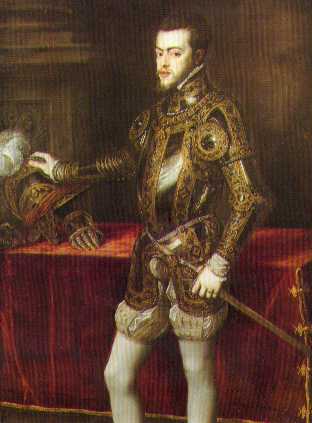
Francisco Toledo was a character that certainly should not go unnoticed in the history of Peru. He was born in Oropesa, Castellón, son of the Count of Oropesa and later he was also Count of Oropesa. He was undoubtedly the true organizer of Peru that would later endure, but he will always have the stain of having been the one who gave the execution order against Tupac Amaru, even though he was aware that he was not guilty of what he was accused of and against his own advisors. It is one of those circumstances in History in which it is understood that a good communication between the parties would have probably solved a problem that ended up being much bigger.
Different versions circulate about what happened in the moments before he was beheaded. According to Bernabé Cobo in his book "History of the Inca Empire"He asked to be baptized and received the name Felipe Tupac Amaru. Once he was baptized, he addressed those present and urged them to convert and believe in one God, creator of all things.
According to other versionsHe was indeed baptized and spoke to those gathered there. The chronicles say that there were more than 20,000 souls that filled the Plaza de Armas of Cuzco. He first silenced them with a single gesture of his hand and spoke to them to ask for forgiveness, to cease their violence and try to live in peace. He also told the Viceroy that he would pray to God for him. And it seems that his last words were to his God the Sun and to Pachamama, Mother Earth, just before he himself placed his head on the stone on which he would be beheaded.
In the image, the preserved painting of Tupac Amaru.
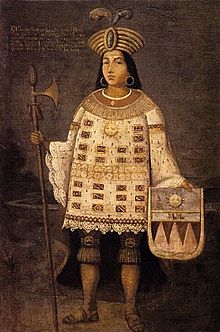
Forty years had passed since Pizarro executed Atahualpa and twelve since the death of Sayri Tupac. Tupac Amaru was Atahualpa's nephew and Sayri Tupac's brother.
While all this was going on, the marriage or the destiny of Beatriz Clara CoyaSayri Tupac's only daughter had generated important discussions.
In 1,558 she was taken to the convent to be cared for, attended and watched over by the Poor Clares. Her mother took her out of the Convent and took her to the house of Don Diego Arias Maldonado, known as "the rich". An influential conqueror, the richest of Cuzco, who had developed a very intense relationship with the most powerful religious Order in those lands: the Jesuits.
While living there, the marriage of the girl to Cristobal, the son of the owner of the house, was planned. But the local colonial authorities took a dim view of the possible union between a member of an already wealthy local conquistador family and a princess descended from the royal lineage of the Incas. Discussions went so far that it was even claimed that Cristóbal Maldonado had raped the girl, in order to force the marriage with her. He was accused of conspiracy and sent by force to Spain, under the pretext of a revolt of mestizos, but soon after the falsehood of these accusations was proven, as it relates Levillier in his letters.
Almost twenty years after these events, Beatriz Clara Coya, the daughter of Sayri Tupac, who had been in the Convent of Santa Clara de Cuzco and protected in the house of Don Diego "the rich", was given in marriage in 1,590 to Martín García de LoyolaHe was the grandnephew of St. Ignatius of Loyola and commanded the forces that hunted down Tupac Amaru 18 years earlier in the jungle. Martin even incorporated the decapitated head of Tupac Amaru in his own coat of arms, as Hemming states in his book "The Conquest of the Incas" pp. 458-461.

Beatriz's fortune, which was notorious for the time although it had been poorly managed, made her a very attractive bride.
Martín García de Loyola's reward for having succeeded in capturing Tupac Amaru was to give him his rich niece in marriage. The Jesuits, in this way, also achieved an important victory in these new territories. They united the nephew of their founder with the heiress of the Incas.
Cristóbal Arias Maldonado, the previous suitor, upon learning of the death of Tupac Amaru and the reward promised by the Viceroy, returned to Peru in 1580 and tried to block the wedding with Martín García de Loyola, but was unsuccessful.
By then things had already changed a lot in what was already known as Peru: Cuzco had become the junction linking all the roads leading through Spanish America, the mines of Potosi had been discovered in the Upper Peru and the quicksilver mines in Huancavelica - the city around the mines was founded in 1570 at the behest of Viceroy Francisco de Toledo and was named Villarrica de Oropesa -; local agriculture had developed enormously through the reductions of Indians who wanted the communities to produce for their own benefit and a Royal Decree had been issued in 1576 obliging the landowners to give the Indians land to grow bread and wages for the work done.
In 1596, Doña Beatriz's husband, Don Martín García de Loyola, died while Governor of Chile and with his death, problems returned for the Coya. She returned from Chile, where she had lived with her husband and daughter, settled in Lima, faced the attempt by others to take control of the whole Yucay Valley of her property and died in Lima on March 21, 1600, as Maria Rostworoski explains in her book "Doña Francisca" dedicated to the first born daughter of Francisco Pizarro.
From the marriage between Doña Beatriz Coya Inca and Don Martín García de Loyola, Doña Ana María de Loyola y Coya-Inca was born in Concepción (Chile). Doña Ana María would be the first Marquise of Santiago de Oropesa.
About this title of nobility granted by Philip III to the granddaughter of Sayri Tupac, some conjectures could be made. To grant to the granddaughter of the last recognized Inca Emperor the title of Marquesa de Santiago de Oropesa by Philip III, King of Spain, enclosed, voluntarily or involuntarily, a lot of messages.
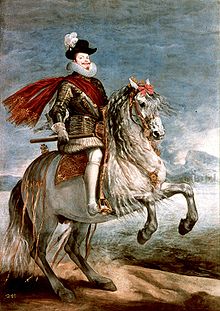
Philip III was the son of Philip II, against whom the last Inca, Tupac Amaru, had rebelled. And he had done so, among other things, by killing the envoys of the King of Spain who carried the Cédula de Aceptación de Condiciones in which the King of Spain recognized the Inca Monarchy and also recognized its dynastic right, something that had never happened before, nor would it happen again in the future. The Austrian dynasty that ruled Spain and all the territories that corresponded to it -almost two thirds of the known world at that time-, had not been until then very given to forget the affronts. However, the granting of the title and what was attached to it by royal design, was a sign of the King's forgiveness and desire for reparation. Something very necessary after the previous decades through which the whole Spanish territory had passed: Philip II had left his son the empty coffers for the battles that he had undertaken and Philip III nevertheless would go down in history for being a great peacemaker, protagonist of the very important Pax Hispanica and with whom the Spanish Empire reached its greatest extension.
If the title was granted to Doña Beatriz, it was also probably due to friendship with Doña Beatriz's husband, Don Juan Henríquez de Borja and commitment to the Duke of Lerma, in the image below, a person of the highest confidence of the King and his Valido.
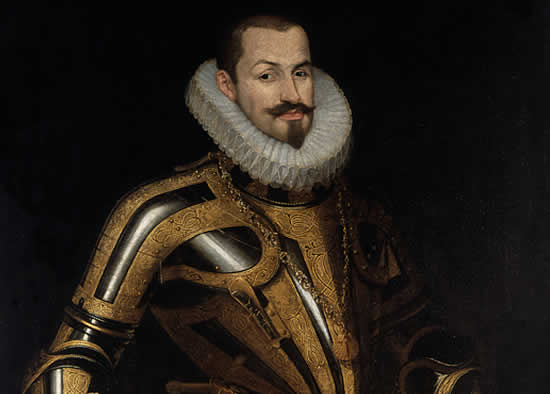
Juan Henríquez was the son of the V Marquise of Alcañices and Don Álvaro de Borja y Aragón, who in turn was the son of the V Duke of Gandía. He was also a first cousin of the King's valide, the Duke of Lerma.
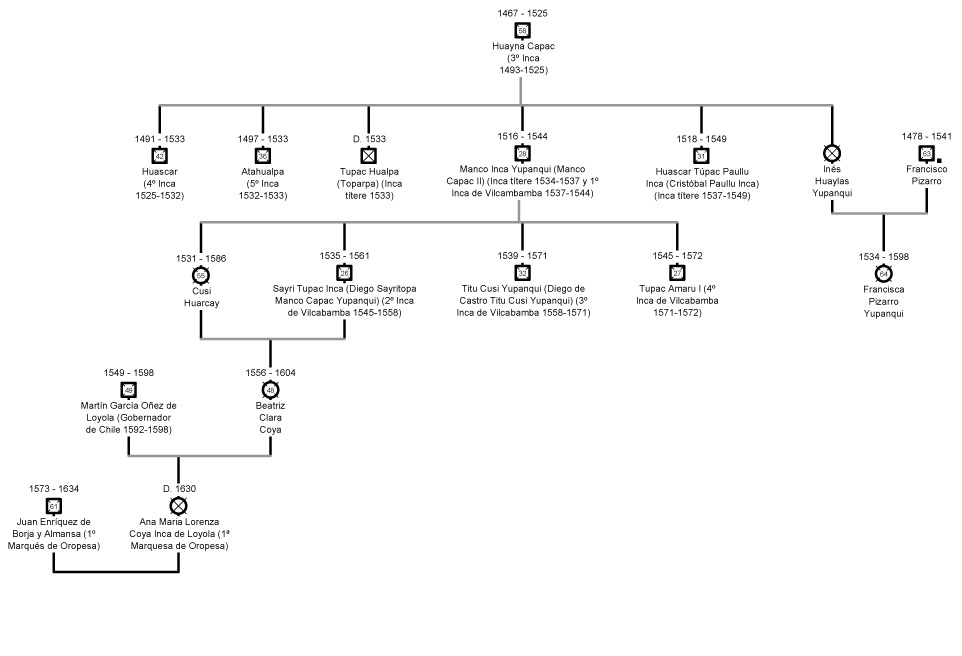
As grandson of the V Duke of Gandía, he was familiarly linked to the Society of Jesus, which had gained and was gaining so much importance in those years, especially in Peru. San Francisco de BorjaIV Duke of Gandía -in the image below- great-grandfather of Juan Enríquez, was the III Father General of the Society of Jesus.
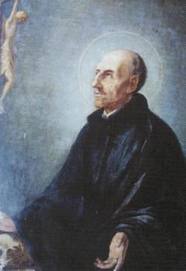
Undoubtedly, granting a title of Spanish nobility to the heiress of the last Inca was a way of trying to mimic and further develop the syncretism between the Hispanic-Christian culture and the pagan Inca culture.
According to Arzáns de Orsúa y Vela in his book "History of the Villa Imperial"On page 98, the festivities celebrated in Potosi, which reminded the locals of the dress of their ancient Inca kings, had been in some way transformed, Christianized or colonized.
The Jesuits, who had grown significantly in both influence and power in Peru in all the years since the arrival of the Spaniards, used theater and performances very commonly as a tool to support evangelization.
Stefano Arata in "Was the Garden in Bloom" says that "....The "evangelizing" theater is inscribed in this line by becoming a space of intercultural communication and artistic contamination in which the indigenous colonial subject demanded that the theatrical production be adapted to the addressee who remained the possessor of a native cultural baggage. The Christianized Indians did not renounce neither their mythology nor their divinities and, therefore, their "pagan" culture and the resistance itself would survive....".
The origin of the festivities was ancestral but was used by the authorities to commemorate the triumph over Andean and Inca sovereignty.
One of the clearest ways of doing this was by honoring the Apostle Santiago, in whom the Spanish soldiers had placed their trust and to whom they had traditionally entrusted themselves when attacking and defeating Manco II in Cuzco. The figure of the Apostle Santiago was very important and was very present in the evangelizing message. The annual procession held in honor of the Apostle was one of the most important events of the year.
About the name of Oropesa, two comments. The original title seems to have been Marquis of Santiago del Valle de Yucay, but the Valley was also known by the Spaniards as Valle de Oropesa, name of the main city founded by the Spaniards in the Valley. Who gave the name to the city of Oropesa in the Yucay Valley was Don Francisco Toledo, V Viceroy of Peru, born in Oropesa (Castellón), also Count of Oropesa.
Francisco Toledo arrived in Peru, as I said before, with the order to pacify the Viceroyalty and to reach agreements with the Incas. Probably he started his mandate as Viceroy with his best intention to achieve it, what proves the sending of the Augustinian friar Diego Ortiz to negotiate to Vilcabamba. But the facts were certainly surprising, the lack of communication between the parties undoubtedly also played against his intentions and the bellicosity shown by the warriors and advisors of the Inca did not facilitate the task. After having begun trying to reach sincere agreements with the Incas, in view of the violent samples received as answers, he ended up being forced to give order to invade, to pursue, to make prisoner and finally to execute in the Square of Cuzco to Tupac Amaru, the last Inca monarch owner.
It is a curious historical coincidence that the title that years later received the heiress of this recognized royal blood, was that of Marquis of Santiago de Oropesa.
The King when creating the title joined to the same one the dignity of Adelantada and therefore the Mayorazgo of the Valley of Yucay, whose privilege of mayorazgo affected the towns of San Benito de Alcántara, San Bernardo, Santiago de Oropesa (Urubamba), Yucay and Huayllabamba. With this Felipe III confirmed the Agreement reached years before by Felipe II with the grandfather of Doña Ana, Sayri Tupac.
To get an idea of the importance given by contemporaries to the marriage of Beatriz Inca Coya to Martín de Loyola, grandnephew of Saint Ignatius of Loyola and Founder of the Society of Jesus, as well as to the marriage of their daughter to Juan Henríquez, grandson of Saint Francisco de Borja and Third General of the Society of Jesus, it is enough to mention that in the 17th century -a hundred years after all these events took place- a large canvas was painted in which both marriages were represented. This canvas was kept in the Church of the Society of Jesus in Cuzco. It is known that at least six versions of it were made: one of them preserved in the Pedro de Osma Museum in Lima and another in the Beaterio de Copacabana, also in Lima.
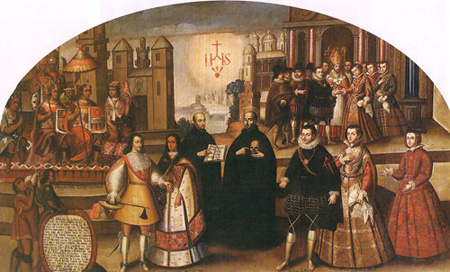
It seems clear that the Jesuits wanted to make clear and divulge as much as possible the links of the Religious Order with the indigenous nobility. In fact, on October 10, 1741, day of San Francisco de Borja, they even celebrated a theatrical representation of the Wedding of Don Martín García de Loyola with Doña Beatriz in the Church of the Society of Jesus in Cuzco.
And as History is intertwined and so are the paths, the current Marquis of Santiago de Oropesa, Don Alfonso Martos Carrión, unites in his blood the blood of the most important Incas with that of some of the most important Spanish saints and evangelizers: Saint Ignatius of Loyola, Saint Francis Borgia and Saint Francis Xavier.
Doña Ana María Lorenza de Loyola Coya, I Marquesa de Santiago de Oropesa, for whom the title was created, was - in addition to all her Inca descendants that we have been discussing - as daughter of Martín García de Loyola, great-granddaughter of the elder brother of Saint Ignatius of Loyola. Loyola. His grandfather, a nephew of Saint Ignatius, Martín García de Loyola y Licona, founded the Mayorazgo de Oñaz y Loyola. His third son was Don Martín García de Oñaz Loyola y Araoz and his son, Don Martín García de Loyola y Araoz. Martín García Oñaz de LoyolaHe was the one who married in second marriage with Doña Beatriz Coya Inca, from whose marriage Doña Ana María was born. Therefore, the father of the first Marquesa was a grandnephew of San Ignacio de Loyola.
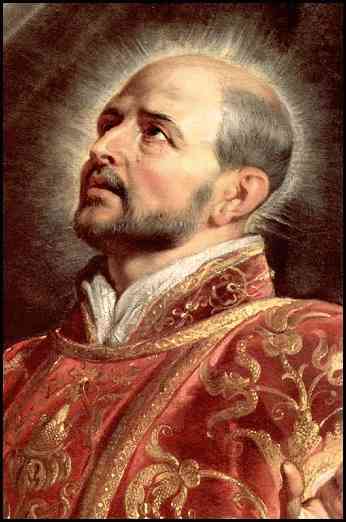
Ana de Loyola Coya married Juan Henríquez de Borja, as I mentioned earlier, who was the grandson of the V. Duke of Gandía and great-grandson of Saint Francisco de Borja, IV Duke of Gandía. His descendants, therefore, already combined the blood of the Incas with the blood of two important Spanish saints: Saint Ignatius of Loyola and Saint Francisco de Borja.
In addition, Don Alfonso Martos Carrión, the current Marquis of Santiago de Oropesa, is the grandson of Doña María del Carmen Azlor de Aragón y Guillamas, VIII Duchess of Granada de Ega. The II Duke of Granada de Ega, Don Antonio de Idiáquez y Garnica (1,686-1,755) married Doña María Isabel Aznárez de Garro y Echeverz, V Countess of Javier, which also connects him with the Javier family. The mother of San Francisco Javier was María Azpilicueta Aznárez, original of the Baztán and descendant of Pyrenean monarchs. It was she who brought to her marriage to Juan de Jassu Atondo the Castle of Javierwhere the Saint was born. The castle was donated to the Society of Jesus at the beginning of the 20th century by Doña Pilar Azlor de Aragón y Guillamas, XVIII Duchess of Villahermosa and sister of the grandmother of the current Marquis of Santiago de Oropesa.
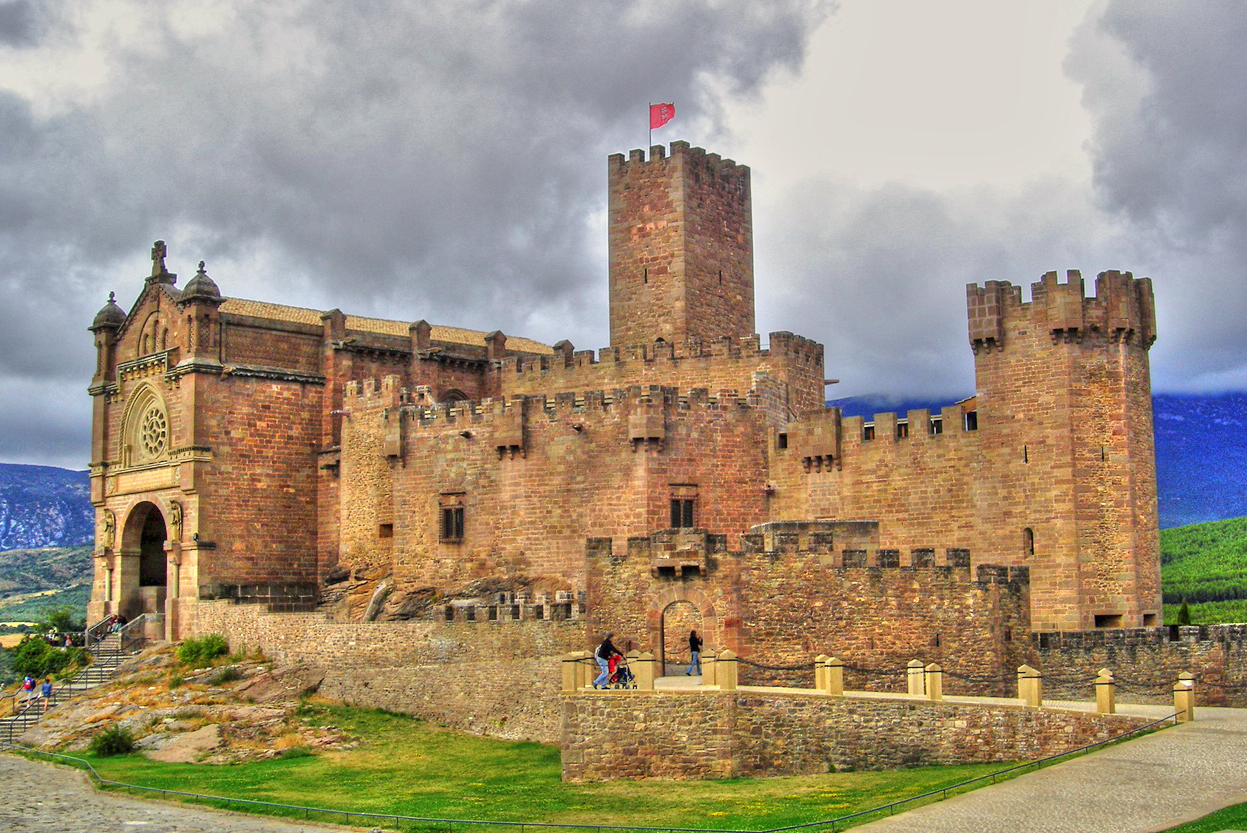
The royal blood of the Incas, years later, was therefore forever united with the blood of three important Spanish Jesuits and saints: St. Ignatius of Loyola, St. Francis Borgia and St. Francis Xavier.
I hope that all these historical accounts help a little to understand the fruitful and difficult relations that took place from the beginning between the Incas and the Spaniards.
I make a special mention to Don Felipe Luna, for his invaluable help in advising me and providing me with information and texts, many of them reproduced in this post. My sincere thanks and respect for his help.