

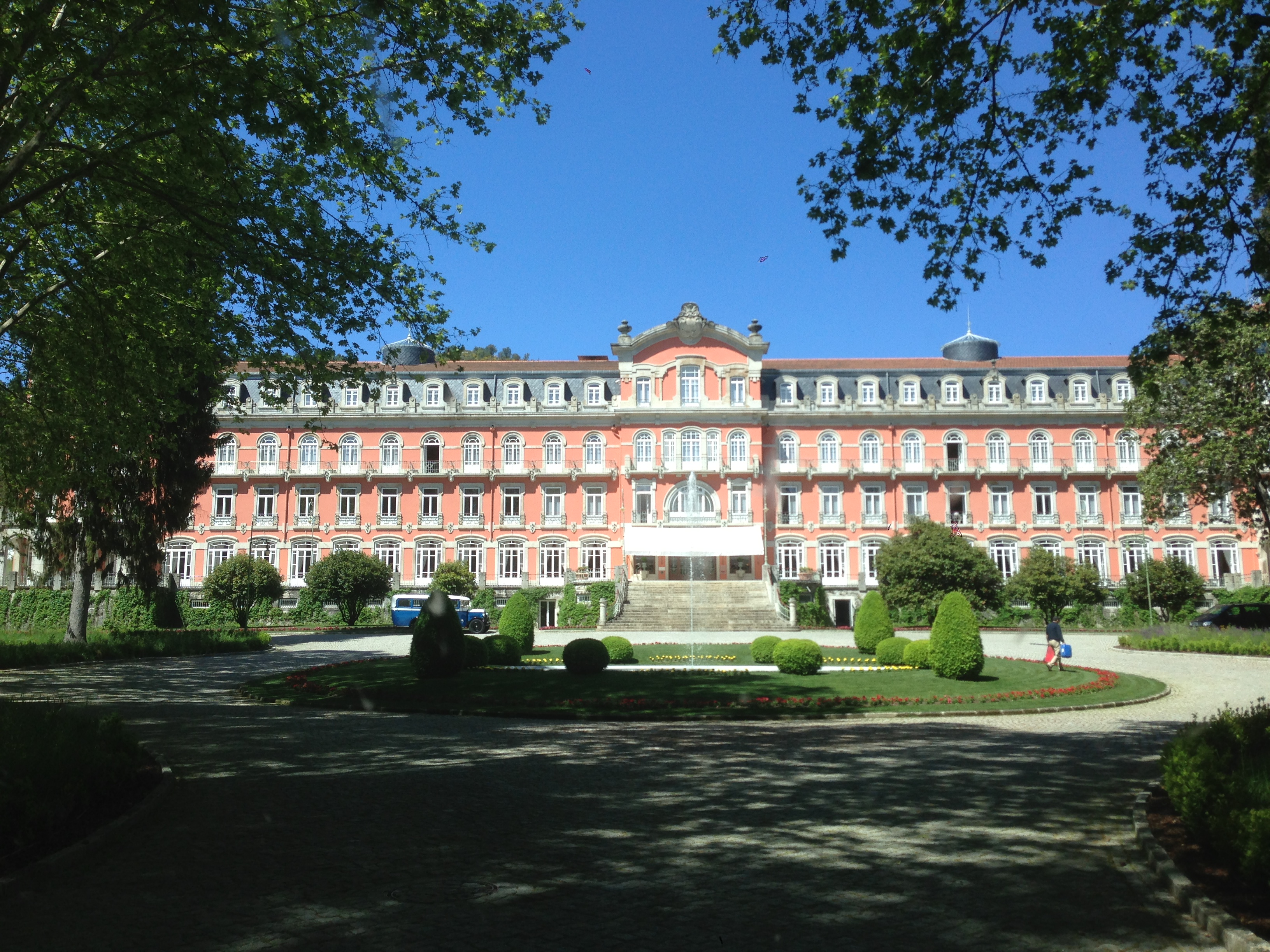
Organized by the Banco Espirito Santo Groupby EDP, Accenture, Ericsson, My Change y SAP a meeting has been convened at the Vidago Palace Hotela few kilometers from Porto with the aim of reflecting on the relationship and paths between Portugal and Spain and to discuss new business models.
Economic crisis, social cohesion, uncertain future, measures adopted, deficit, cuts... The outlook looking back has been undoubtedly difficult. This is what we Spanish and Portuguese citizens are experiencing. But it seems that positive expectations are opening up. This is perhaps one of the contents on which most emphasis is being placed.
Emilio Lamo de EspinosaChairman of the Elcano Royal Institutehas been telling us about a deeply troubled country. "We don't know what's wrong with us and that's what's wrong with us!"He said, recalling a phrase from Ortega y Gasset. He spoke of a social tendency to deeply distrust politicians and rulers, of a crisis of citizenship, but of a moderate crisis that rejects the use of violence. He reflected on the changes that our society has undergone since the previous major crises: in this case, the crisis is truly global. It affects the whole world, something that has never happened before. It is especially hard in urban areas and it is the first time in history that city dwellers outnumber those living in the countryside, and today the countries that are growing do so at rates far higher than those at which they were growing before. At the beginning of the 20th century, the big markets were the USA and the UK. Then they were growing at rates of 1% or 2%. China and India have been growing at rates above 8% for years.
There has been a great divergence between the countries of the East and those of the West. In 1950, 25% of the world's population was European. Today it is only 8% of the world population and in a very short time it will not exceed 6%. This gives Europe an enormous capacity of power and less and less control of the future.
Technologies are spreading faster and faster. This diffusion of technologies makes productivity more and more equalized between different markets. The more population, the more productivity if the technology gap is no longer significant. Demographic growth becomes power. This simple reflection explains that history is no longer written, nor will it be written for a long time, in the West. For many generations, Europe wrote the future of the world. Now it is up to others to write it for it. This is the world we are facing and the future that lies ahead of us. There is nothing like knowing it in order to consider how to face it.
Juan Carlos Martínez LázaroProfessor of Economics at the Instituto de Empresa has highlighted the boomerang effect that the difficulties the economy is going through are having and how we are getting back to where we started from.
Joao César das Nevesof the Portuguese Catholic Universityreflected on the evolution of wealth in peoples like ours: Portuguese and Spanish. And he explained how we had never before faced a crisis situation in the way we are facing it now: from a position of relative wealth. This will undoubtedly help us to move forward, despite the indebtedness and stagnation in which our economies are mired. Undoubtedly, an optimistic vision.
One of the elements to reflect on is, of course, the breakdown of solidarity that has occurred within Europe. In the countries of Southern Europe we have dedicated ourselves to spending, spending and spending and now we are asking the countries of the North to show solidarity with us. We have clearly mortgaged the future of the following generations. To pay the debt generated and to be able to get out of this vicious circle of economic difficulty and demographic decline, there is no choice but to consider growth and business development.
Once again, the "magic" word that has been on everyone's lips lately comes to the fore: entrepreneurs. The future can only be considered from a business perspective. For this reason, we must also consider the supply and demand side of the business world. On the demand side, Europe and in particular Portugal and Spain have to consider the models they want to offer. On the supply side, we must consider education: how and in what way do we want to educate our people so that they are capable of facing the future we are facing?
It can only be a great entrepreneurial spirit supported by governments, encouraged by citizens and driven by creativity, talent and the desire to take risks that will take us forward. Either our governments, our politicians and our citizens start to be aware of this and begin to develop a whole policy in this direction, or it will be very difficult to get out of the boomerang that Professor Martínez Lázaro was talking about.
Tomorrow we will present the case of Zinkia and the evolution of the Pocoyo brand. Less than three years ago, more than 90% of our turnover was made in Spain. In 2012 it was only 4% and we expect to leave it at rates close to 1% in the coming years.