

Last Thursday, April 26th, the presentation of the book about Floridablanca, written by my dear friend the Ambassador of Spain, took place at the headquarters of the Matritense Sociedad de Amigos del País. José Luis Pardos and titled "The Modernizer: an approach to Floridablanca".
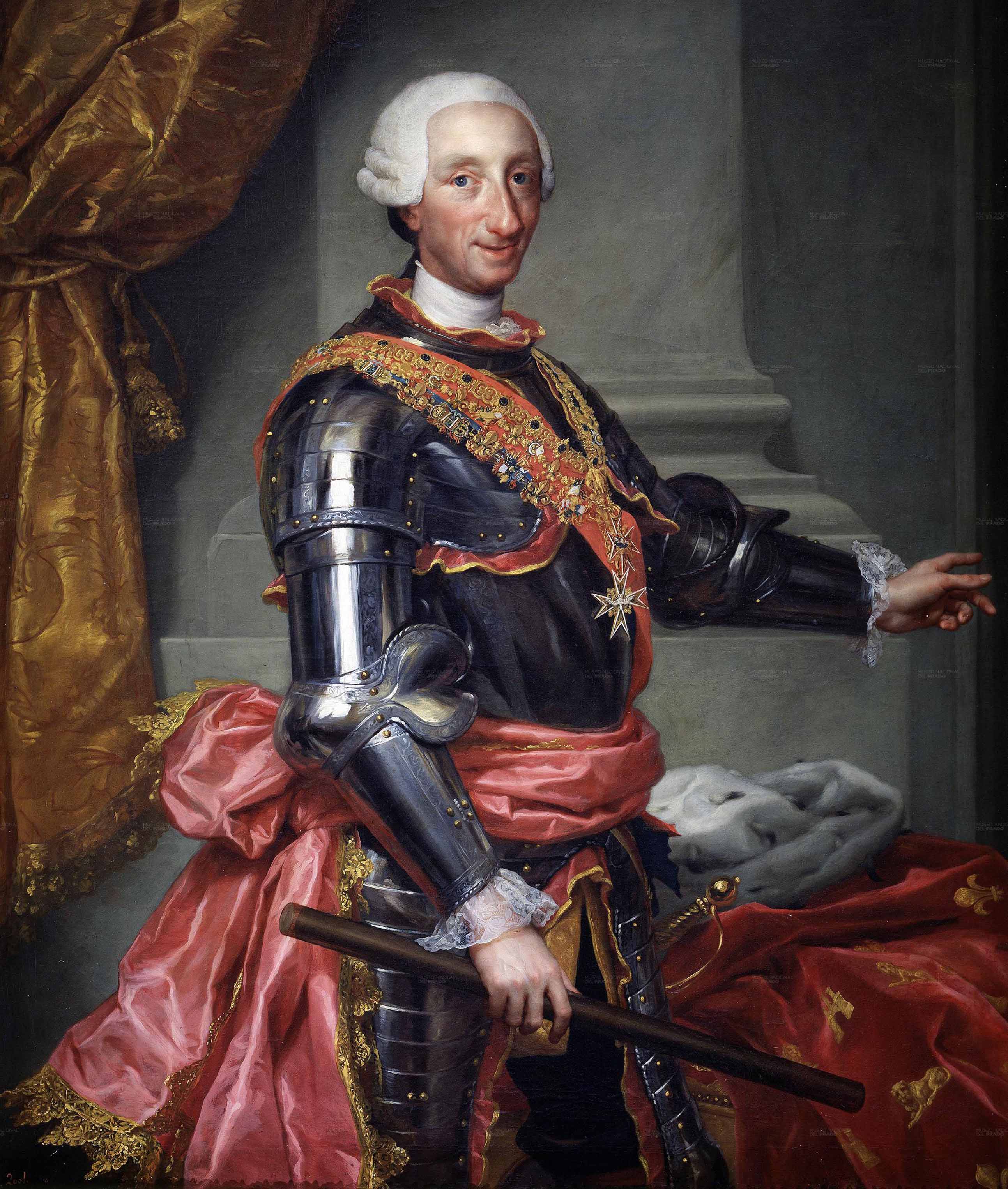
The place could not have been more special: the Lujanes TowerIt is located in the Plaza de la Villa in Madrid, in front of what was until recently the headquarters of the Madrid City Hall and in its Central Hall. The place of course has a very special charm due to its characteristics: founded by Charles III at the request of CampomanesThe main wall of the room where we were, has on the main wall the portrait of Charles III painted by Mengs. And just opposite, on the other side of the room, the portrait, albeit much smaller, of Don José Moñino, the first Count of Floridablanca, who was also, as the current president of the society reminded us, the eighth president of the society. In the painting, Floridablanca appears portrayed with the Golden Fleecetherefore, it must have been painted already in the times of Charles IV.

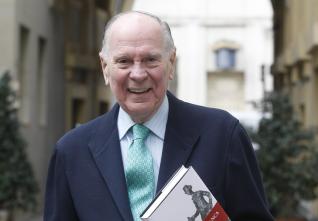
At the invitation of José Luis Pardos -author of the book- I found myself seated at the speakers' table, no more and no less than next to the illustrious and admired Professor Don Vicente Palacio Atard, professor at the universities of Barcelona, Valladolid and Complutense de Madrid. There was also the president of the Sociedad de Amigos del País, Don Gonzalo Anes, recently named Marquis of Castrillón on April 8 when His Majesty the King awarded him the title for his "The Marquis of Castrillón".extensive and brilliant academic, research and teaching work in the service of Spain and the Crown."The current Director of the Royal Academy of History and José Luis Pardos, who together with Floridablanca was the protagonist of the meeting.
Don Vicente Palacio, at 92 years of age, when his turn came, stood up and made an impressive, orderly, calm and very complete exposition of all the main milestones of Floridablanca's political and professional activity. Without a single piece of paper, supported by a prodigal memory and a striking historical clarity, he went through each and every one of the most important moments in the life of Don José Moñino y Redondo. This is surely one of the moments that I will remember for a long time in my life.
As a curious fact, Don Vicente made a broad exposition of the policy followed by Floridablanca with respect to the Ottoman Empire, which sought to achieve a good relationship with them and at the same time with Catherine the Great of Russia in order to have a counterweight to the growing English power and the French influence. The curious and anecdotal fact is that the book, still "hot" and fresh off the press, was sent to me by José Luis a few months ago, just as I was about to leave for the airport and fly to Istanbul. I took it with me and read it, almost in its entirety, on the way. And the little I had left to read I did it as soon as I arrived at the Hotel and before going to bed. Curiosities of life: I ended up with the story of my ancestor's life in the heart of what was the Ottoman Empire.
I have to say, as I commented in my brief contribution to the presentation, that what I liked most and what most caught my attention in the book were on the one hand the approach to the human character made by the author and on the other hand, discovering the deep religiosity of Floridablanca, very contrary to the image of Freemason that for years has been given to him perhaps because of his direct intervention in the annulment of the Society of Jesus.
From reading Pardos' book I was especially struck by several facts, but especially the fact that for his captivity in Pamplona he asked only for sacred books such as the Old and New Testament and that in case of death he asked to be buried with the Franciscan habit, both things very distant from something that a freethinker or Mason would ask for. I was also particularly struck by the peace with which Floridablanca faced his exile. On the same day that he was forced to leave without collecting any of his belongings and with the express indication that he could not enter Madrid, February 28, 1792, during his first stop in Corral de Almaguer to put fresh horses in his carriage, worried about not knowing who his successor would be and for not having been able to transmit to him all that he was involved in after 16 years of government, he began to write some letters, which would be known as the "The "Letter of the Emperor".Political Will"of Floridablanca. Letters that he writes without any rancor or sadness, that reveal a character full of enormous peace and inner security and that draw an impressive portrait of Spain's relations with its colonies, its enemies, its allies and its citizens.
Two months later, on May 6, he finishes writing his letters. The last letters have already been directly addressed to Don Pedro Pablo Abarca de Bolea, 10th Count of Arandawho had been named his successor. And the same Count of Aranda, on July 11, two months later, ordered him to be imprisoned in Pamplona, accusing him of very serious crimes that he had not committed and of which he defended himself without using a single law book or document: he only relied on his memory and his intelligence. Once the Count of Aranda had been substituted by GodoyGodoy, who was at the head of the government for only nine months, will be the one who on April 14, 1794 gives Floridablanca back his freedom, amnesting him of all his political responsibilities, although not of the civil ones. Which, by the way, could never be proven.

One last curious fact about this day of the book presentation: at the end of the presentation, my nephew Borja Casans Castillejo, Count of Ampudia, who had been present at the presentation, came over. We got to talking and ended up having dinner together at the Nuevo Club de Madrid, together with his friends Alfonso Martos, Marques de Santiago de Oropesa and Joaquín Rebuelta Melgarejo. A dinner that started at 10 p.m. and ended almost at 2 a.m., after a very lively chat.
This gives me the opportunity to tell a series of curious anecdotes...
The first Count of Ampudia was Don Francisco Sandoval y Rojasgrandson of San Francisco de BorjaFather General of the Society of Jesus and Duke of Gandía.
Don Francisco Sandoval was also the first Duke of Lerma and valid of Philip III, the protagonist of the famous painting of Rubens. I would almost go so far as to say that the Count of Ampudia was the absolute heir to the Empire formed by Philip IIThe King was never interested in government and Don Francisco was always concerned about it. He ruled for more than 18 years with a completely absolute power and we had just come from listening to the presentation of an ancestor who also ruled Spain for 16 years. They are probably the executive rulers who have spent the longest time at the helm of Spain's interests in history.
.jpg?uselang=es)
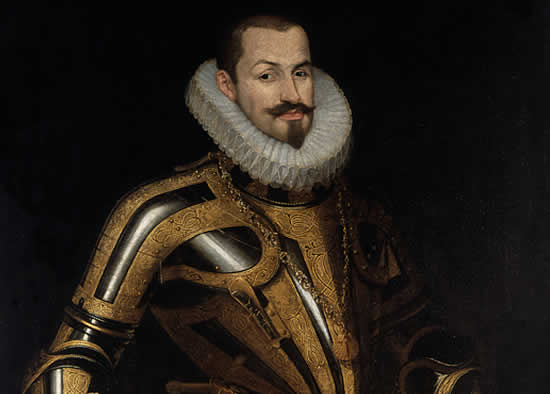
Another anecdote of the day: it was the Count of Ampudia who moved the Court from Madrid to Valladolid in 1601, stripping it of its status as capital of the Empire, although once again they decided to bring it back to Madrid in 1606. And it was precisely in the Plaza de la Villa where the book was presented.
The title of Marquis of Santiago de Oropesa was created in honor of the king of the Incas, HuaynaCapacfather, among others, of Huascar, Atahualpa y Manco Inca. The title was granted by Philip III to Ana María de Loyola y Coya-Inca, a granddaughter of SayriTupacwho in turn was the grandson of Huayna Capac. Felipe III is the same King who granted Francisco Sandoval the title of Count of Ampudia. Ana María de Loyola y Coya-Inca was granted the title largely because of the relations that her husband, Juan Enríquez de Borja had at the court of Philip III. Juan Enriquez de Borja was also a grandson of San Francisco de Borja as was the Duke of Lerma. Juan Enriquez was the second son of Álvaro de Borja y Aragón y Elvira Enríquez de Almansa. Alvaro de Borja was the son of Francisco de Borja, Duke of Gandía.
Juan Enríquez was a grandson of Francisco de Borja by his father and Francisco Sandoval was a grandson of Francisco de Borja by his mother. Both were, therefore, first cousins.
The first Marquise of Santiago de Oropesa was married to a first cousin of the first Count of Ampudia. Today we have sat down to dinner with the descendants of these great personalities of our history.
About the first Marquesa de Santiago de Oropesa, her relationship with the Inca Empire and with the Spanish I talk a little more in depth in another post.
How small the world is and how interesting history is!