

Some good friends have celebrated their 25th anniversary of marriage and they called us together in León to do with them what we could each of us in our own way. Road to Santiago.
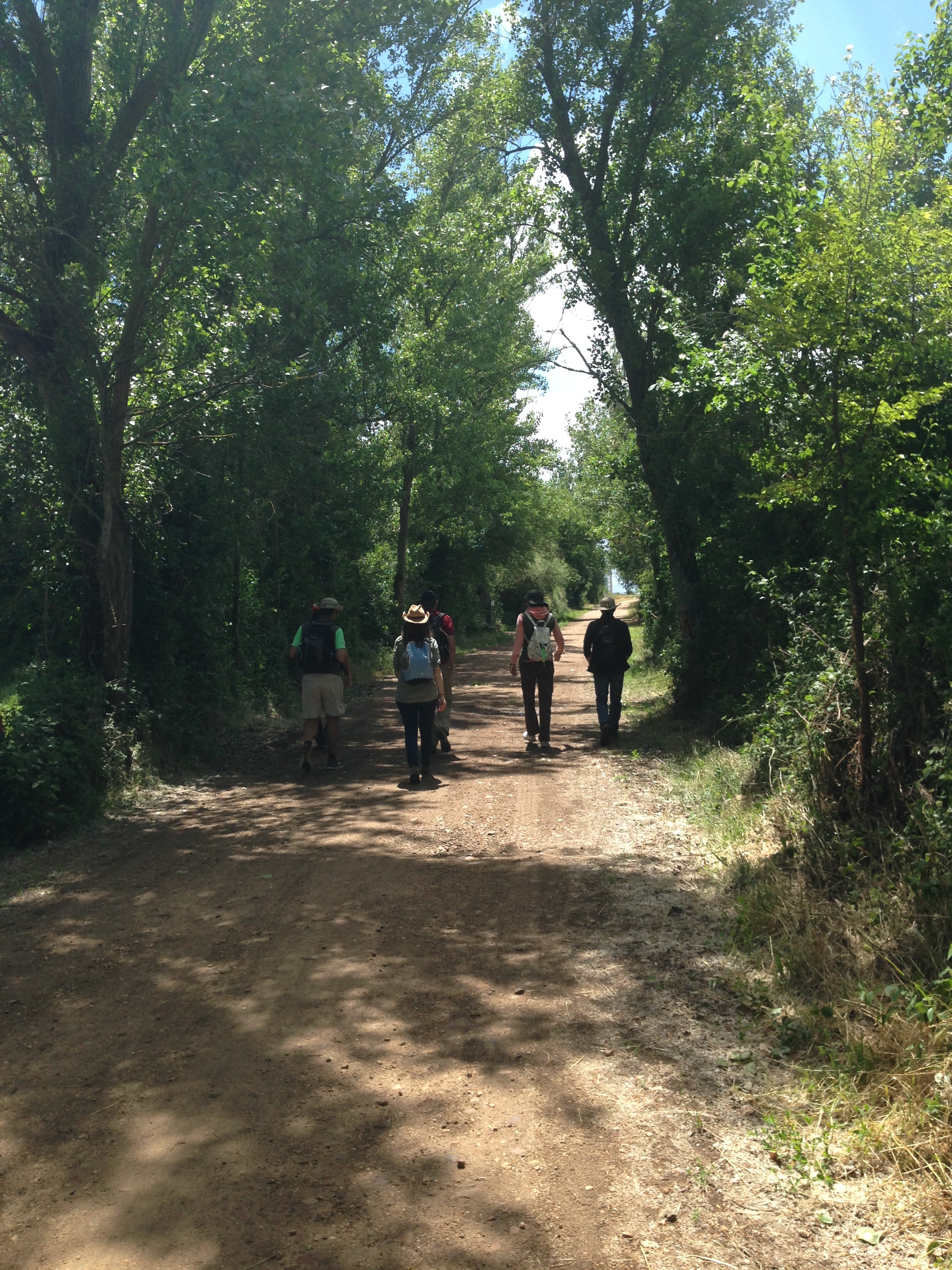
They will walk from León to Santiago. More than 300 kilometers. In my case, I have been able to join only for two days. The first day, Saturday, we walked 24 kilometers. Between León and San Martín del Camino. Most of the way, by the way, uphill! and with the air blowing hard and against us. So that things do not seem easy.
The second day was spent visiting León.
The two days have been quite a surprise.
We start the Camino from the Parador of León, the San Marcos Conventwhich is almost in the center of the city.
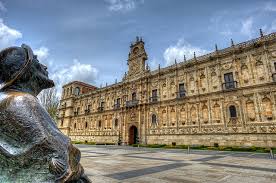
As soon as you leave the gate of San Marco, you cross the Bernesga River and little by little, following the signs that are perfectly marked, you leave the city center.
The first part of this Camino day is not particularly beautiful, to be honest. You go between highways and roads and you don't start to see the countryside until you've done about 16 or 17 kilometers and most of them uphill. You spend about four hours walking until you really start to be surrounded by countryside. On this Camino day we made it as far as the entrance of San Martín del Camino. It appears that the stretch from there to Astorga is the most beautiful of this stretch of the Camino. I will miss it. I don't have the chance to do it now. But let's look at the positive side: what I have been able to do has been a magnificent experience.
We spent Sunday getting to know León a little bit. And... what a set of surprises too!
I can't go on too long in this post because I would like it to be quick and easy to read. I will focus on a few pieces of information.
A little bit of history, to position ourselves...
At the beginning of the new millennium, in the year 1000, the situation in the north of the Peninsula was divided.

The Christian kingdoms had been consolidating, but there was still a great division among them. The Asturian monarchy, founded by Don Pelayo, had moved its neuralgic center to León and the rest of the Christian territories were ruled by different heads.

The different kings and lords fought united against the invaders, they related through marriages, but they also fought among themselves.
The first major defeat of AlmanzorThe Christian warlord of the Caliphate of Cordoba in his advance on the Peninsula, was inflicted by the Christians in the Battle of Calatañazorin the year 1.002. For the battle were united against Almanzor the armies of:
- Castillawhich was a county. Its sovereign was Count Sancho García. Shortly after the battle he would marry his daughter Muniadona to the King of Pamplona Sancho Garcés III who had battled with him. Muniadona's sons, grandsons of the Count of Castile and sons of the kings of Pamplona, married the sons of the King of León, Alfonso V.
- Lion. The ruler of León was King Alfonso V. Years later he would marry his sons to the sons of the King of Pamplona. One of the sons of the King of Pamplona, Ferdinand, would snatch the Crown of León from the son of Alfonso V.
- Pamplona. The ruler of Pamplona was Sancho Garcés III el Mayor. Shortly after the battle, he married the daughter of Count Sancho García, Count of Castile, and incorporated the county of Castile into the crown of Pamplona.
Almanzor died after the Battle of Calatañazor, the division also started among the Muslims.
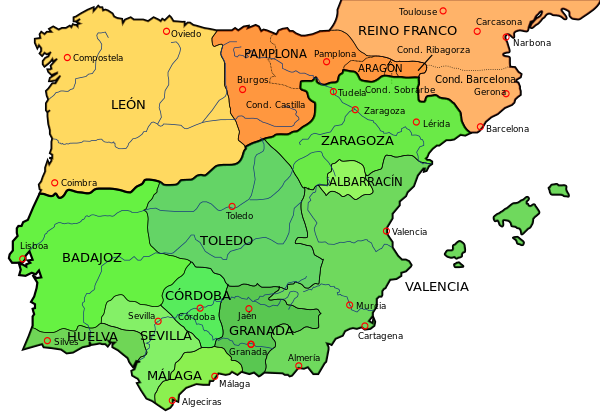
One of the sons of Sancho Garcés IIIFernando, King of Pamplona -but not his first-born son- received from his parents the title of Count of Castile. This county together with its territory had been incorporated into the Kingdom of Pamplona by the marriage of Ferdinand's father with Muniadona. The latter, in turn, had received the County as an inheritance from her father. Sancho Garciathe one of the Buenos Fueros. Muniadona was never considered a Countess of Castile. The title was given to her husband, since women could not then be queen-owners, and she ceded it to Ferdinand, their son.
Ferdinand, Count of Castile, married Sancha de León. Sancha was the sister of the King of León Bermudo III. Both -Sancha and Bermudo- were sons of Alfonso V, the one who had fought against Almanzor. The year was 1033.
Bermudo III was married to JimenaBermudo, younger sister of Ferdinand of Castile. Bermudo and Fernando were therefore brothers-in-law twice over: two brothers married to two sisters.
The fathers of both had been at each other's throats for years over their own kingdoms. Sancho Garcés, king of Pamplona had invaded León and had been seizing large portions of land. Alfonso V had died and his son Bermudo was only fifteen years old when he acceded to the throne. Since he acceded to the throne he had been fighting to recover the lost lands.
Shortly after marrying Sancha de León, Fernando began to battle against his brother-in-law Bermudo III to take the Crown of León from him.
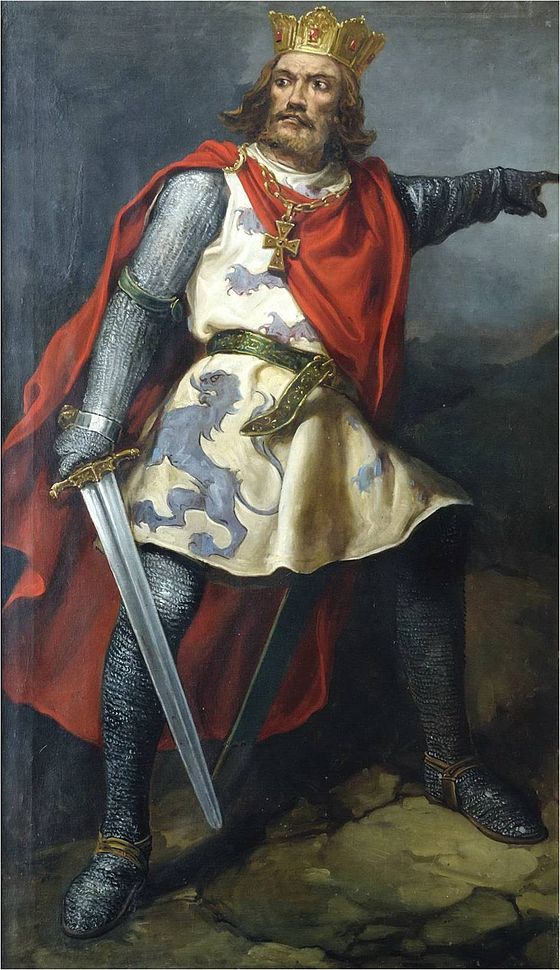
They were found in the battle of Tamarón. It was the year 1037. Bermudo was a young man of 20 who had had to fight hard for his crown. He was a daring fighter and had a horse known for its agility and speed: Pelayuelo. When his troops galloped against the Castilian forces he rode ahead and distanced himself from the rest of his knights. It does not seem that he was aware of his loneliness in the attack against his enemies. He died the first, pierced by a spear.
When Bermudo died, his sister Sancha inherited the Crown, which she ceded to Fernando, her husband. With Bermudo died the last of the kings of the Asturian dynasty founded by Don Pelayo The year 714 marked the beginning of the reign of the man who would be known in history as Ferdinand I of Leon.
Leon, depositary of the Holy Grail - what a surprise!
In the middle of his reign Ferdinand I received from the Caliph of Denia an unexpected gift: the Cup that Jesus Christ used at the Last Supper in Jerusalem.

He had sought and obtained it in order to obtain a commitment from the King of León not to invade his territories, which he did. Unpublished documents discovered a few months ago in the Cairo Library explain how this happened, but we will leave that for a later post.
Leon, the world cradle of parliamentarism, did you know?
In Leon was where for the first time an absolute monarch, Alfonso IXThe people were invited to participate in the Cortes. It was the spring of 188.
His father Fernando II had just died. Alfonso IX was the fifth king of León after the great Ferdinand I of Leonknown as Ferdinand the Great. He reigned in León 120 years after Fernando I.

Alfonso IX had just been appointed and was facing numerous problems: on the one hand, his kingdom was being attacked from all sides, trying to take cities and territories from him in view of his youth. His stepmother, Mrs. Urraca López de Harohis father's third wife Ferdinand II of LeonHe was trying to snatch the throne from her to give it to his son. Sancho Fernández de Leónthe half-brother of Alfonso IX. The economic crisis they were going through was really very hard and certainly the people crowded at the doors of the palace where he lived in the Monastery of San Isidoro in Leon. Every time he looked out on the balcony or tried to go out into the street he would find a lot of poverty and little future. Something that surely generated anguish in the people and in the King himself. He summoned the Cortes Regias and sought the presence of his people. He needed support and there was no one better than the people to provide it. In return he would give them solutions.
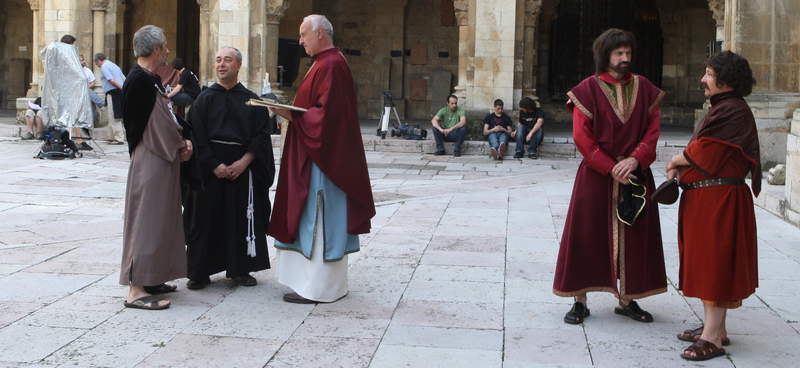
Neither Toledo nor Benavente were the first Cortes to have the people present to speak, expose problems and seek solutions. It was León and Alfonso IX.
The Memory of the World Register of the UNESCO says of the "Decree of Leon" which is the oldest documentary evidence of the European parliamentary system that "....reflect an original model of government and administration within the framework of medieval Spanish institutions, in which the plebs participate for the first time, making decisions at the highest level, together with the king, the church and the nobility through elected representatives of towns and cities....".